



Zebra Shades vs. Sheer Shades: Which Should You Choose?
Zebra shades are usually the better choice for flexible light control, a modern look, and privacy that changes throughout the day. Sheer shades favor a softly diffused daylight, a broader outdoor view, and an elegant fabric finish. When choosing between them, start with function. Appearance should confirm the decision, not make it for you.
How Do Zebra Shades and Sheer Shades Work?
Both styles manage daylight with layered fabric. Their different structures determine how each shade moves, covers the window, and frames the view.
What Is the Main Difference Between Zebra and Sheer Shades?
A zebra shade uses a continuous loop of alternating sheer and opaque bands. Its 2 layers slide past each other. A sheer shade suspends tilting fabric vanes between translucent panels.
|
Comparison Point |
Zebra Shades |
Sheer Shades |
|
Construction |
Alternating sheer and opaque bands |
Fabric vanes between sheer panels |
|
Light adjustment |
Bands slide and overlap |
Vanes tilt open or closed |
|
Outdoor view |
Interrupted by opaque bands |
Softer and more continuous |
|
Privacy |
Stronger when opaque bands overlap |
Strongest with vanes fully closed |
|
Room darkening |
More opacity choices |
Mainly designed to filter light |
|
Appearance |
Crisp and contemporary |
Soft and dimensional |
|
Maintenance |
Gentle dusting between layers |
Delicate care around vanes and panels |
|
Best suited to |
Changing light and privacy needs |
Diffused daylight and decorative appeal |
How Do Zebra Shades Adjust Light?
Zebra shades are dual-layer window coverings with alternating sheer and opaque fabric bands. Align the sheer bands and daylight enters. Shift them, and the opaque sections cover the openings for less light and more screening.
How Do Sheer Shades Soften Light?
Sheer shades behave more like fabric blinds. Open vanes let the translucent panels scatter direct light and soften the outdoor scene; closed vanes reduce light and add separation.
Which Is Better for Light Control And Privacy
Zebra shades are built around quick transitions between brightness and coverage; sheer shades prioritize gentle light and a less interrupted view.
Zebra Shades Provide Flexible Light and Privacy Control
When the sheer sections of zebra shades on the front and back layers align, more daylight enters. Shift the fabric slightly, and the opaque bands begin covering those openings. Overlap them completely for the shade’s stronger visual screening and darker setting.
Sheer shades also provide adjustment, but their vanes connect light and privacy more directly. Opening the vanes improves daylight and outdoor visibility at the same time; closing them increases screening while reducing both.
For frequent switching between brighter daylight, partial coverage, and a more private closed setting, zebra blinds usually provide more distinct options.
Sheer Shades Offer a Clearer View
Sheer shades provide a clearer view because their horizontal vanes rotate away from the main sightline when opened. This creates wide, continuous viewing spaces between the vanes.
Zebra shades work differently. Even when their sheer bands align, the opaque stripes remain positioned across the window. Those stripes block horizontal portions of the view, creating repeated visual interruptions from top to bottom.

Which Looks Better and Is Easier to Use and Maintain?
Style is personal, but operation and upkeep depend on reach, fabric delicacy, installation space, and how often the shade moves.
Zebra Shades Look More Modern
Horizontal lines give zebra shades a tailored, graphic look. Subtle bands blend into neutral rooms; higher contrast makes the window a feature. The style suits modern and minimalist spaces.
Sheer Shades Look More Elegant
Floating vanes add depth without hard slats. The soft, slightly formal effect pairs naturally with drapery, upholstery, and layered neutral textiles.
Zebra Shades Are More Convenient for Frequent Use
Zebra shades are generally more convenient in rooms where light and privacy change several times a day. You can admit filtered daylight, create partial coverage, or close the opaque sections without first raising the shade.
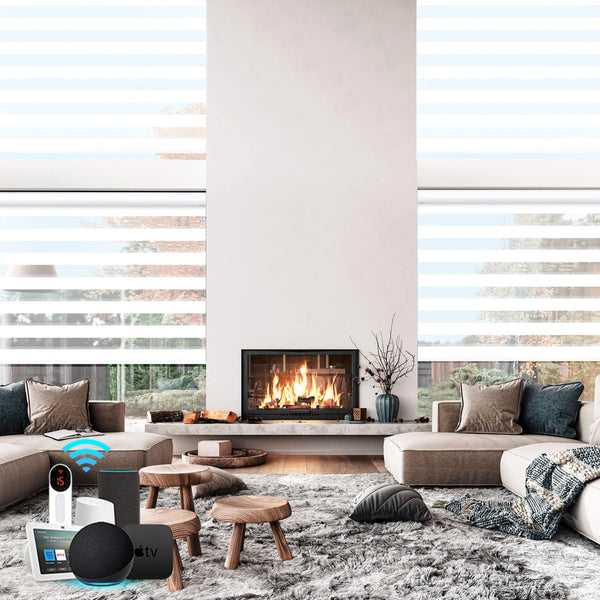
For frequently used or difficult-to-reach windows, the Bringnox Motorized Zebra Roller Blinds 100% Blackout supports remote, app, and voice-control options to simplify blind adjustments. Its multichannel remote can control up to 15 shades, either together or individually. In a living room with several windows, that capacity lets you adjust the entire group at once, or fine-tune a single shade when needed.
Zebra Shades Are Simpler to Dust
The broad, flat bands of a zebra shade are usually easier to dust. A microfiber cloth or soft vacuum attachment on low suction can handle routine surface dust.
Sheer shades need a gentler approach. Their translucent panels can wrinkle, while the suspended vanes may lose their shape if pressed or scrubbed.
Whichever style you choose, follow its care instructions, avoid soaking the fabric, and keep moisture away from motors and electrical components.
Sheer Shades Often Cost More
Sheer shades often cost more because their suspended vanes, translucent panels, and specialized headrails require a more complex construction. They are frequently positioned as a decorative, higher-end treatment rather than a simple light-control product.
That price difference is not universal. Custom sizing, premium fabrics, oversized windows, motorization, and smart controls can make a zebra shade more expensive than a basic sheer shade.
Which Shade Is Better for Each Room?
Choose by room function before considering color or style. Zebra shades are generally better where light levels and privacy needs change during the day. Sheer shades suit spaces where soft daylight, decorative texture, and the outdoor view receive more attention.
Zebra Shades Work Best in Multi-Use and Privacy-Focused Rooms
Their alternating bands let you change those settings while the shade remains lowered, making them practical for spaces used in several ways.
-
Living rooms: A living room may need natural light in the morning, less brightness for television in the afternoon, and more privacy after sunset. Zebra shades can handle those transitions without exposing the entire window.
-
Home offices: Adjustable bands help manage direct brightness as the sun moves toward a desk or monitor. You can reduce incoming light while retaining some daylight.
-
Bedrooms: Denser opaque bands provide stronger room darkening than standard sheer shades. They also create better visual coverage at night.
-
Street-facing rooms: The opaque bands can limit views into the room without requiring the shade to be raised. After dark, close the bands fully and check the window from outside with the lights on.
Sheer Shades Work Best in View-Focused and Decorative Rooms
Sheer shades are better suited to rooms where softly filtered daylight and a broader outdoor view matter more. Their open vanes create continuous viewing spaces, while the translucent panels soften direct light and give the window a lighter appearance.
-
Formal dining rooms: These rooms rarely require strong darkness. Diffused daylight and floating fabric vanes can complement drapery, upholstered chairs, and other decorative finishes.
-
View-focused living rooms: When a window overlooks a garden, skyline, waterfront, or open landscape, sheer shades preserve more of that scene than lowered zebra shades.
-
Sunrooms and low-privacy spaces: Sheer shades can moderate strong daylight while maintaining a visual connection to the outdoors. They work best where the window does not face a close neighbor, sidewalk, or other sensitive sightline.
Sheer shades are less suitable for bedrooms that require substantial darkness or street-facing rooms that need frequent privacy changes. Their strongest screening generally comes when the vanes are fully closed, and open vanes should not be treated as dependable nighttime privacy.

FAQs
Can you layer zebra or sheer shades with curtains?
Yes. Curtains add decorative depth, side coverage, and another privacy layer. Position the rod so the panels do not rub zebra fabric or obstruct sheer vanes. Choose lined curtains when extra darkness matters.
Are zebra or sheer shades better for sliding glass doors?
Neither is an automatic winner. Consider the opening’s width, daily traffic, headroom, and finished shade weight. Multiple shades may improve access across a wide door.
Can zebra or sheer shades be used in kitchens or bathrooms?
Possibly, if the exact materials suit the conditions. Kitchens add grease and splashes; bathrooms add humidity. Verify the fabric, hardware, and motor specifications.
Should every room use the same shade style?
No. Repeat a color family, cassette finish, or control system for continuity, then choose the construction by function.
Should You Choose Zebra Shades or Sheer Shades?
Choose zebra shades if flexible adjustment, modern lines, stronger dimming, and changing privacy matter most. Choose sheer shades for softer daylight, elegant fabric depth, and a clearer outdoor view.
In practice, zebra shades often suit bedrooms, offices, and street-facing rooms; sheer shades favor formal dining areas and view-led living spaces.
Before ordering, test fabric samples at the real window during the day and after dark. Confirm the measurements, mounting depth, edge coverage, and exact control package as well.