



Motorized Blinds Energy Efficiency: Do They Save Energy?
Yes, motorized blinds can save energy by controlling heat at the window. The motor does not provide insulation by itself. It helps the shade move before unwanted heat enters or indoor heat escapes. Homes with large sunny windows usually have the clearest opportunity for savings. Hard-to-reach windows also benefit because automation makes regular operation practical.
How Do Motorized Blinds Improve Energy Efficiency?
Windows allow heat to move between the home and the outdoors. A shade changes this heat flow only while it covers the glass, so consistent operation matters. Motorization improves consistency. Smart controls can move several shades together without requiring someone to visit every window.
Automation Makes the Shade Move at the Right Time
A motorized shade may use only a handheld remote. An automated shade adds schedules or sensor-based routines through a compatible app, hub, or smart home system.
A timer can close west-facing shades before strong afternoon sun reaches the glass. Sunrise and sunset routines can manage daylight without relying on fixed clock times throughout the year.
The Attachment Energy Rating Council recognizes this difference. Its residential labels can show an improved energy rating when a tested window attachment follows an automated operating schedule.
Summer Savings Come From Blocking Solar Heat
About 76% of the sunlight striking a standard double-pane window enters the home as heat, according to AERC and U.S. Department of Energy data. Closing an opaque shade before direct sun reaches the window can reduce this solar heat gain.
The Bringnox Motorized Roller Shades 100% Blackout Linen uses opaque fabric with a multilayer backing. Its app supports timed movement and sunrise or sunset control. These functions allow the shade to close before the room becomes hot. Custom sizing also helps limit uncovered glass when the shade is measured correctly.

Winter Savings Depend on Insulation and Timing
About 30% of a home’s heating energy can be lost through windows. A closed shade adds another layer between the room and the cold glass, although the benefit changes with the material and edge gaps.
Open the shade when winter sun provides useful warmth. Close it near sunset so the window covering can slow nighttime heat loss.
How Much Energy Can Motorized Blinds Save?
No single percentage applies to every home. Published results depend on the shade, control method, window condition, and comparison product. The strongest studies test the complete system. This includes the window attachment and how it is operated.
|
Source |
Test |
Result |
Limit |
|
DOE |
Tight cellular shade |
40%+ less window heat loss |
Cellular shades only |
|
PNNL residential study |
Scheduled cellular shades |
17% heating savings, 15% cooling savings |
Controlled test home |
|
PNNL field summary |
Optimized efficient shades |
15–25% cooling savings |
Specific shades and schedules |
|
2025 Applied Energy study |
39 automated shades |
Up to 20.5% daily savings |
Commercial high-rise |
These findings show the potential of properly selected window coverings. They do not promise that every motorized roller shade will produce the same reduction.
Why Published Energy Savings Vary
A large west-facing window can create more cooling demand than a small shaded window. The same product may therefore produce different results in two rooms.
Existing glass also changes the outcome. Older windows give insulating shades more heat transfer to address, while efficient low-emissivity windows may leave less room for improvement.
Shade behavior remains important. PNNL found that leaving large south- or west-facing windows uncovered sharply reduced the savings produced by cellular shades.
How Can You Measure Savings at Home?
Record electricity or gas use before installation, then compare the same months after the shades begin following a schedule. Compare energy units instead of the bill total because utility rates can change.
Keep thermostat settings consistent during the comparison. A smart thermostat may show cooling runtime. Lower afternoon runtime after sunny windows receive scheduled coverage can help indicate whether the shade is reducing cooling demand.
Which Motorized Blinds Are Most Energy Efficient?
The most efficient choice depends on whether the main problem is conductive heat transfer or direct solar gain. Fabric construction and fit usually influence performance more than the motor brand. The motor adds value when it helps the selected material cover the window at useful times.
Cellular Shades Provide Stronger Insulation
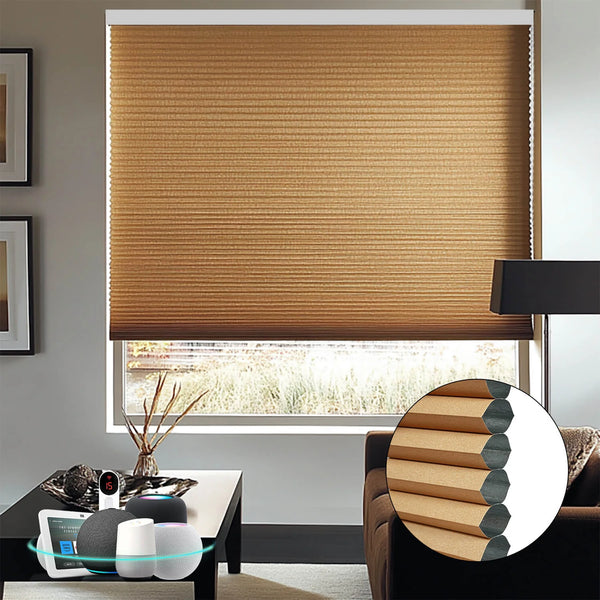
Cellular shades hold air inside their folded pockets. This construction slows heat movement and generally provides better year-round insulation than a thin, free-hanging fabric.
The Bringnox Blackout Motorized Cellular Shades address rooms that lose heat through exposed glass. Its 38 mm cellular structure creates an air layer, while Matter over Thread control supports timed and grouped operation.
Blackout Roller Shades Control Strong Sun
Opaque roller fabric can block direct sunlight before it warms floors and furnishings. This makes motorized blinds useful for bedrooms or west-facing rooms where afternoon solar gain is the main concern.
A roller shade usually has more open space around its edges than a tracked cellular shade. An outside mount can cover more of the opening, while compatible side channels may reduce gaps.
Light-Filtering Shades Preserve Useful Daylight
A light filtering roller shade can reduce glare while keeping the room bright. It may lower lighting use when full blackout would require electric lights during the day.
Its cooling effect is usually weaker than that of an opaque or reflective shade. Buyers should compare solar performance instead of relying on color or a general light-filtering description.
A light-colored reflective surface facing the glass can return more solar energy toward the window. Dark fabric may absorb more heat and release part of it into the room.
How Should Buyers Compare Motorized Blinds Energy Efficiency?
Start with the window problem. Strong direct sun calls for solar control, while cold glass and nighttime heat loss call for insulation.
Compare fabric data and installation details before comparing apps. Smart controls cannot compensate for a covering that is poorly suited to the window.
Look for an Independent Energy Rating
The current publicly listed AERC 100 standard governs energy performance ratings for window attachments. Eligible residential categories include cellular shades and roller shades. An AERC label provides warm-climate and cool-climate ratings. Higher numbers within the same product category indicate greater expected improvement.
An automation value may also appear on qualifying products. This helps buyers separate tested performance from a general claim that a shade is energy efficient.
Confirm That the Controls Support Automation
A remote moves the shade when someone presses a button. It does not automatically follow sunlight or temperature. Check whether scheduling requires a hub. Confirm that the selected motor works with the app or smart home platform you plan to use.
Sunrise control is useful because daylight times change throughout the year. Group control helps several windows with the same exposure move together.
Match the Power Source to Daily Use
Rechargeable motors suit existing homes where new wiring would be disruptive. Hardwired power blinds suit planned construction and frequently operated shades.
Solar-assisted charging can reduce manual charging when the window receives suitable light. Compatibility depends on the selected motor and solar panel.
Motorized blind power options can help determine whether battery, solar-assisted, or hardwired power fits the installation.
Prioritize Windows With the Largest Load
Begin with large windows that receive direct summer sun. Rooms with older glass may also offer more improvement than areas with efficient windows and exterior shade.
Testing one exposure group first can provide useful information before a whole-home order. Track room comfort and energy use through a meaningful part of the season.

FAQ
Do motorized blinds use a lot of electricity?
Usually no. The motor runs only while the shade moves. Exact consumption depends on motor size, movement frequency, and standby equipment such as a hub.
Do motorized blinds need to be plugged in?
No. Available power options include rechargeable batteries and hardwiring. Some systems also support solar charging or a plug-in adapter.
Do motorized blinds work during a power outage?
Battery models may continue working with a local remote. Hardwired shades usually stop unless backup power is available. App controls may fail if the home network loses power.
Can Existing Blinds Be Motorized?
Sometimes. A retrofit motor must match the tube, weight, and control system. Replacement is often more practical when the existing blind was not designed for motorization.
Do Motorized Blinds Save Energy?
Yes, when the shade has suitable thermal or solar performance and follows an effective schedule. Automation produces the most value on windows that are difficult to operate consistently.
Choose the fabric for the heat problem, limit gaps, and separate windows by exposure. Use published savings as evidence of potential rather than a promise for every home.