



Do Blackout Shades Keep Heat Out in Summer?
Yes. Blackout shades can keep some summer heat out by blocking direct sunlight before it warms the room. A standard blackout roller shade mainly reduces solar gain, while a blackout cellular shade also slows heat transfer through the window. The result depends on the shade structure, window-facing backing, fit, and daily use.
How Do Blackout Shades Keep Heat Out?
Sunlight passing through glass warms floors and furniture. Those surfaces then release heat into the surrounding air. A closed blackout roller shade prevents much of that sunlight from reaching the room. Less solar energy reaches interior surfaces.
Opaque Fabric Blocks Direct Solar Heat
Blackout fabric uses an opaque coating or bonded layer to stop sunlight from passing through the panel. This reduces glare and radiant heating inside the room.
The fabric can still become warm near the glass. A light window-facing backing reflects more solar energy, while a dark backing usually absorbs more heat.
Rooms that need daylight instead of full darkness may use light filtering roller shades. They soften direct sunlight but usually provide less solar control than blackout fabric.
Close Edge Coverage Limits Heat Leakage
Roller shades need clearance beside the fabric to move freely. These gaps can expose glass and allow direct sunlight into the room. Warm air near the glass may also circulate at the edges. A close-fitting shade limits this movement more effectively than one with wide perimeter gaps.
Blackout roller shades with side tracks cover the vertical spaces beside the fabric. A cassette and suitable bottom coverage can improve the result further.
Which Blackout Shades Keep the Most Summer Heat Out?
Blackout roller shades use different structures to control heat. Cellular shades combine light blocking with trapped air, while roller shades mainly reduce direct solar gain.
|
Shade type |
Main function |
Performance |
Best use |
|
Blackout cellular shades |
Block sun and trap air |
Highest |
Hot sunny rooms |
|
Blackout roller shades |
Block direct sunlight |
Moderate |
Bedrooms |
|
Reflective-backed blackout shades |
Reflect solar energy |
Moderate |
Strong direct sun |
|
Tracked blackout shades |
Cover edge gaps |
Moderate to high |
Close perimeter control |
Blackout Cellular Shades Provide the Most Insulation
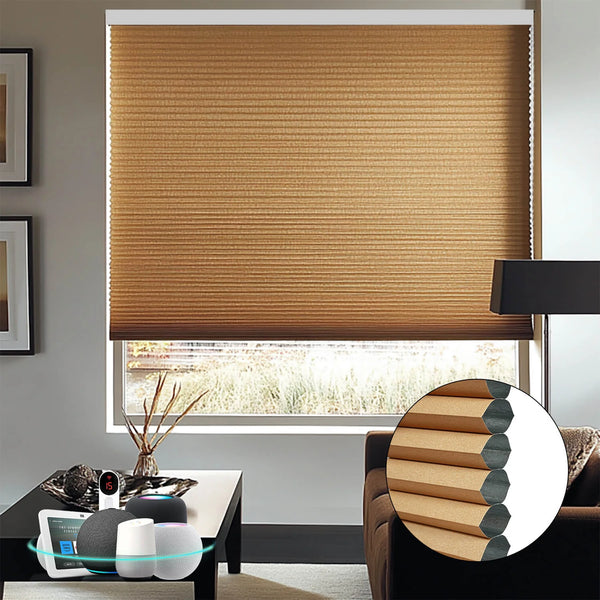
Cellular blackout shades usually provide the strongest insulation among interior blackout options. Their opaque material blocks sunlight, while the enclosed cells hold air near the window.
The trapped air slows heat moving from the warm glass toward the room. Close side coverage reduces circulation around the shade and helps preserve this benefit.
The Bringnox Blackout Motorized Cellular Shades use a 38 mm cellular structure made from polyester fabric. The cells add an insulating air layer, while the blackout material controls direct sunlight. Custom sizing helps cover the opening closely. Motorized operation also makes it easier to close tall shades before direct sun reaches the window.
Blackout Roller Shades Reduce Direct Solar Gain
Flat blackout roller shades reduce heat mainly by preventing sunlight from reaching indoor surfaces. They work well in bedrooms where darkness is the main requirement.
Multilayer roller fabrics provide more thermal resistance than thin opaque material. They still lack the enclosed air pockets found in cellular shades.
Reflective-Backed Blackout Shades Return Solar Energy
A light backing facing the glass reflects more solar energy than a dark surface. This reduces the heat absorbed by the shade and released toward the room.
The Bringnox Motorized Roller Shades 100% Blackout Linen combines opaque fabric with a white window-facing backing. The fabric blocks direct sun, while the backing improves solar reflection.
Its multilayer construction provides more thermal resistance than a basic single-layer roller fabric. Custom sizing also reduces uncovered areas around the panel.

Tracked Blackout Shades Control Perimeter Gaps
Side tracks cover the vertical spaces required by a free-hanging roller shade. This limits direct sunlight beside the panel and reduces air movement around the fabric. A cassette covers the area around the roller. Suitable bottom coverage reduces the remaining opening above the sill.
A complete tracked system provides more consistent perimeter control than side channels alone. It suits bedrooms where summer heat and narrow light lines are both problems.
The fabric must remain aligned inside the tracks. Poor alignment can create friction or expose glass along one edge.
How Much Heat Can Blackout Shades Keep Out?
No single percentage applies to every blackout roller shade. Performance changes with the window glass, climate, shade construction, and operating schedule.
|
Verified finding |
Research scope |
Buyer takeaway |
|
76% of sunlight enters as heat |
Standard double-pane window |
Cover sunny glass first |
|
Up to 60% less solar heat |
Tight-fit cellular shade |
Cellular structure performs strongly |
|
15% to 25% cooling savings |
Optimized efficient shades |
Daily operation matters |
|
18% fewer dangerous-heat hours |
Interior roller shades |
Roller shades still help |
The 60% figure applies to tightly installed cellular shades as a category. It does not represent every blackout cellular product.
The 15% to 25% range comes from optimized whole-home use of high-efficiency shades. A single blackout roller shade should not be expected to produce the same result.
How Can You Maximize Heat Control With Blackout Shades?
Blackout roller shades work best when they close before direct sun reaches the room and cover the window closely. Strong fabric cannot correct wide gaps or inconsistent use.
Close the Shades Before Direct Sun Arrives
A shade prevents heat buildup more effectively when it closes before sunlight warms indoor surfaces. Closing it after the room feels hot leaves the cooling system to remove heat that has already accumulated.
Observe when direct sunlight first reaches the floor. Set the closing time slightly earlier instead of using one schedule for every window.
East-facing windows may need coverage early in the morning. West-facing shades should usually close before the hottest part of the afternoon.
Reduce Gaps Around the Full Perimeter
Measure the window at the top and bottom before ordering. Uneven frames can create larger gaps when the shade is based on a single measurement.
Side tracks address the vertical edges. A cassette improves coverage above the fabric, while the correct lower limit lets the bottom bar reach its intended position.
Keep the Shade Close to the Glass
A large open space behind the shade allows heated air to circulate more freely. Mounting the treatment closer to the window creates a smaller air space. The fabric still needs enough clearance to move. Tracks and suitable brackets can guide the panel without holding it too tightly.
Cellular shades benefit from close side coverage because their cells already slow heat transfer through the center. Wide gaps reduce the value of that structure.
Choose the Window-Facing Surface Carefully
The surface facing the glass has more influence on summer solar control than the decorative side facing the room. White or reflective backing returns more energy toward the window. A dark interior color can still work when the reverse side is light.

FAQ
Do Blackout Shades Make a Room Hotter?
Usually no. The area near the glass may become hot, but the shade reduces direct heating inside the room. Reflective backing and close coverage improve performance.
What Color Blackout Shade Is Best for Reducing Heat?
Choose a light window-facing surface. It reflects more solar energy toward the glass. The room-facing color has less influence on heat control.
Do Blackout Shades Help Keep Heat In During Winter?
Yes. Insulating blackout shades can slow heat loss through the window. Cellular construction usually provides more insulation than flat roller fabric.
Are Blackout Shades Better Than Blackout Curtains for Heat?
They can be. Close-fitting shades usually leave smaller perimeter gaps. Properly lined curtains mounted near the window can still provide useful insulation.
Do Blackout Shades Lower Air-Conditioning Costs?
They may help. Blocking solar heat reduces the cooling load, but savings depend on the climate, window, shade construction, and daily use.
Final Answer
Blackout roller shades keep some summer heat out by blocking direct sunlight. Cellular blackout shades provide the strongest interior insulation, while reflective-backed roller shades offer effective darkness and moderate heat control.
Close the shade before direct sun arrives and reduce gaps around the opening. Construction, fit, and daily use determine the final result.