



Window Treatment Ideas for Kitchens: 5 Practical Options
A kitchen covering must handle grease and steam while staying easy to operate. The best window treatment ideas for kitchens use wipeable surfaces near water and light-filtering designs in drier areas. If you cook often, wash dishes below a window, or need privacy from a nearby home, start with location and how much cleaning you want to do. Roller shades are the simplest all-around choice. Zebra shades give finer light control when the window stays dry.
How to Choose Window Treatment Ideas for Kitchens
Kitchen windows do not all face the same conditions. A useful choice begins with the window's distance from water, cooking heat, and outside sightlines. Installation space also affects which design can operate without hitting a faucet or handle.
Match the material to the window location
A shade above a sink receives more spray than other places. Smooth vinyl tolerates wiping better than absorbent cloth, making it a suitable choice. Fabric works best in a dry nook.
Decide how much light and privacy you need
Daytime privacy and nighttime privacy work differently. A sheer or open solar fabric may limit the view from outside in daylight. It can become transparent after dark when the kitchen lights are brighter than the outdoors.
View the window from outside after dark. If the kitchen is visible, choose an opaque fabric or a layered shade that closes fully.
Measure the frame before you choose a mount
An inside mount needs clear recess depth. An outside mount covers shallow frames and can reduce edge gaps. Measure width and height in three places and keep every reading. The same opening can require a different order size for each mount.

Five Practical Window Treatment Ideas for Kitchens
The five practical options below cover different kitchen locations. Smooth materials are easier to maintain near routine mess. Folded or textured shades work better in a dry breakfast area where appearance and softer light carry more weight.
|
Option |
Best kitchen location |
Light and privacy |
Cleaning effort |
Main limit |
|
Roller shade |
Sink wall or compact window |
Full-window coverage with fabric-dependent light control |
Low with a wipeable surface |
Fabric edges can leave light gaps |
|
Zebra shade |
Dry side window or breakfast nook |
Adjustable bands balance filtered light and privacy |
Medium because it has two fabric layers |
Poor fit for direct splash zones |
|
Roman shade |
Dry breakfast area |
Soft filtered light with full-window privacy |
Medium to high because folds hold dust |
Fabric should stay away from splashes |
|
Cellular shade |
Drafty side window |
Full privacy with an insulating cell structure |
Medium because cells need gentle cleaning |
Inner cells are difficult to deep clean |
|
Woven wood shade |
Dry dining side of the kitchen |
Filtered daylight with optional liner privacy |
High because the textured weave traps residue |
Natural fibers do not suit wet locations |
Roller shades for kitchen windows
Choose roller shades when easy cleaning is the main concern. Their flat surface collects less oily dust than folds or layered fabric, and the shade can rise above a faucet while the sink is in use. Cordless motorized roller shades also avoid reaching across a wet counter.
Select a wipeable fabric near the sink and use light-filtering material where useful daylight matters. Moisture-resistant fabric is not waterproof. Keep water away from the motor and test an approved cleaner near an edge before wiping the visible surface.
Zebra blinds for kitchen light and privacy
A breakfast nook may need soft daylight in the morning and more privacy after dark. Alternating sheer and solid bands make zebra blinds suitable for that change without raising the complete shade.
The bands offer more control than a single-opacity fabric. Their two layers also collect more grease and are harder to wipe.
Place zebra shades on a dry side window with good ventilation. Check privacy from outside at night because small gaps between solid bands may still reveal shapes.
Roman shades for a breakfast area
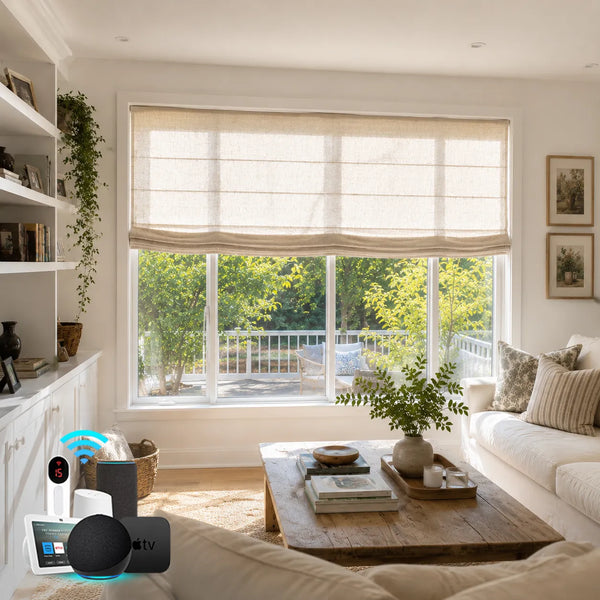
Roman shades fit a dry breakfast area where a softer, more decorative finish is useful. Their fabric folds soften the window without extending toward the floor. The 50%/70%/100% Blackout Motorized Linen Roman Shades provide three opacity choices. The 50% and 70% options retain more daylight, while the 100% fabric provides stronger glare control and privacy. Motorized lifting is also useful above a deep bench or table.
Keep them away from the sink and range because their fabric folds hold dust and cooking residue.
Cellular shades for comfort near glass
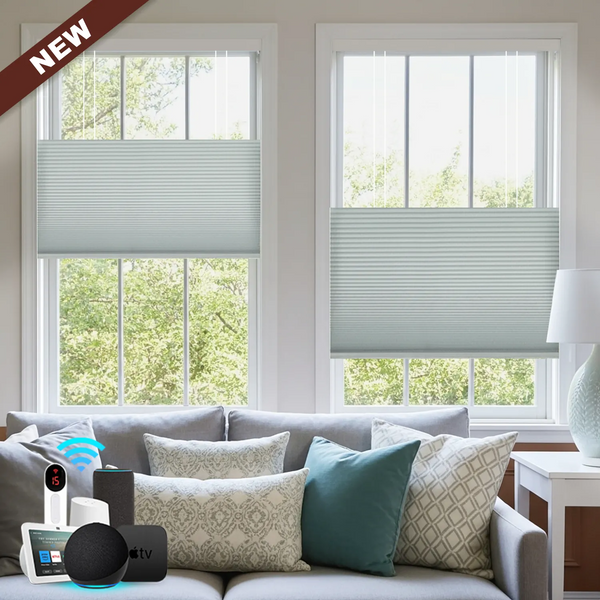
Cold glass or strong afternoon sun can make a breakfast seat uncomfortable. Cellular shades use air pockets that slow heat movement at the window. The Motorized Blackout Top Down Bottom Up Cellular Shades use 38 mm cells and can move from either direction. Covering the lower glass protects privacy while an opening at the top admits daylight.
The cell interiors are difficult to clean after grease enters them. Use this option away from the range and confirm that the moving rails will clear window handles.
Woven wood shades for filtered daylight
Texture and filtered daylight are the main reasons to choose woven wood. The natural weave suits the dining side of a kitchen and softens light without making the window look heavy. An unlined shade may provide limited privacy after dark, so a liner can be necessary. Natural fibers should remain clear of steam and sink spray.
How to Clean and Maintain Kitchen Window Treatments
Airborne oil combines with dust and becomes harder to remove over time. Follow the manufacturer's care label and clean lightly before residue turns sticky.
Remove dry dust before treating marks
Remove dry dust first with a clean microfiber cloth or a low-suction brush attachment. Work from the top toward the lower edge so loosened dirt does not fall onto an area already cleaned. Support the material instead of pulling it tight.
Light dusting during the regular kitchen routine prevents residue from becoming sticky. Pay more attention to the lower edge near a counter because that area usually receives the most airborne oil and spray.
Spot-clean with as little moisture as possible
Test any approved cleaning solution near an edge that is not normally visible. Use a small amount and wait for the area to dry. Stop if the test changes the color, texture, or finish.
Blot a fresh mark rather than scrubbing it across the material. Heavy pressure can stretch fabric or damage a structured surface. Bleach and abrasive pads should be avoided unless the product instructions specifically permit them.
Leave a spot-cleaned shade fully lowered until it is dry. Rolling damp material into a cassette can hold moisture against the fabric and mechanism.
Prevent buildup and inspect the hardware
Run the range hood while cooking and raise the covering before a task that may create splashes. Prevention reduces the need for aggressive cleaning and helps protect both the material and its moving parts.
Inspect the brackets and rails while the window area is clear. Stop operating the shade if a bracket feels loose or the fabric rubs against the frame. Early adjustment can prevent damage to a unit.

FAQs
Should kitchen shades be light filtering or blackout?
Light filtering suits most kitchens. It reduces glare while preserving useful daylight. Choose blackout only when full nighttime privacy or strong sun control matters more than a bright work area.
Does every kitchen window need a covering?
No. A window can remain uncovered when privacy and glare are not concerns. Check the view after dark before deciding, since interior lighting can make an open kitchen visible from outside.
Should kitchen window treatments match the cabinets?
Not exactly. Repeat a cabinet undertone or nearby finish instead of forcing an exact color match. Test the sample vertically beside the cabinet because kitchen lighting can change its appearance.
Do motorized kitchen shades work without Wi-Fi?
Many do. A compatible handheld remote may continue providing basic movement without internet access. App control and voice features can depend on a hub or network, so verify the selected motor.
What window treatments can renters install without drilling?
No-drill shades are the simplest option. Confirm that the tension or twist-lock mount fits the frame depth and review the lease before installation. Keep all supplied protective pads in place.
Final Takeaway
Choose by location before style. A wipeable roller shade is the most practical answer near daily mess, while a zebra shade gives better light adjustment in a dry nook. Roman, cellular, and woven wood shades belong in drier parts of the kitchen.
Measure the actual opening, test privacy after dark, and follow the care instructions for the selected material. The right kitchen window treatment should be easy to clean, safe to operate, and simple enough that you will use it every day.