



Best Blinds for High Windows and Hard-to-Reach Spaces
Motorized roller shades are the best blinds for high windows because you can control them from the floor and avoid handling a long cord. Homeowners with a two-story living room or stairwell window should choose the power source first. Then match the fabric to the required light control. Height changes the buying decision. A shade may look right and still become a problem if charging requires a ladder or the fabric is too heavy for its motor. Start with access and power, then confirm the fit. Color can wait.
Which Blinds for High Windows Work Best
Roller shades suit most vertical rectangular windows because the fabric rolls into a compact tube. Cellular shades add insulation. Zebra shades give finer daylight control when full darkness is not the main goal.
|
Window need |
Best starting option |
Main benefit |
Check before buying |
|
Daily control above reach |
Motorized roller shade |
Remote operation from floor level |
Motor capacity and power access |
|
Bedroom or media glare |
Blackout roller shade |
Opaque fabric blocks light through the cloth |
Edge gaps and mount type |
|
Changing daylight and privacy |
Zebra shade |
Sheer and solid bands adjust together |
Nighttime privacy with lights on |
|
Heat loss at the glass |
Cellular shade |
Air pockets slow heat flow |
Size limit and fabric stack |
|
Sloped skylight |
Tracked or tensioned shade |
Side support holds fabric near glass |
Product made for the exact angle |
Motorized roller shades for daily use
A free-hanging roller shade works best on a vertical, rectangular opening. Motorized blinds let you move a high shade from floor level, while group control keeps a row of upper windows aligned.
Check the maximum finished size for the selected fabric and motor. A wide opening may work better with two aligned shades because each unit carries less fabric. Ask the seller to match the roll direction so both shades look consistent when raised.
An outside mount can cover more of the opening when edge light matters. An inside mount keeps the headrail within the frame, but it needs enough clear depth for the roller and brackets.
Zebra shades for flexible daylight
Upper living-room windows often need glare control during one part of the day without staying dark for hours. Zebra blinds use alternating sheer and solid bands, so a small motor movement changes how much light passes through. Choose denser bands for a street-facing window and use a blackout roller shade where sleep is the main goal.
Zebra fabric works best when the room needs changing daylight throughout the day. It is less suitable when complete darkness is the only goal because the system depends on two bands meeting correctly.
Cellular shades for temperature control
Cellular shades are worth considering when a high window feels cold in winter or receives strong summer sun. The U.S. Department of Energy reports that properly installed cellular shades can reduce heat loss through windows by 40 percent or more and reduce unwanted solar heat gain by up to 60 percent.
Cellular fabric folds into a stack at the headrail. On a tall window, ask for the raised stack size so it does not cover more glass than expected. Choose blackout fabric when room darkening matters. A light-filtering cellular shade makes more sense when the goal is softer daylight with added insulation. A motorized model also needs a drive sized for its fabric weight.
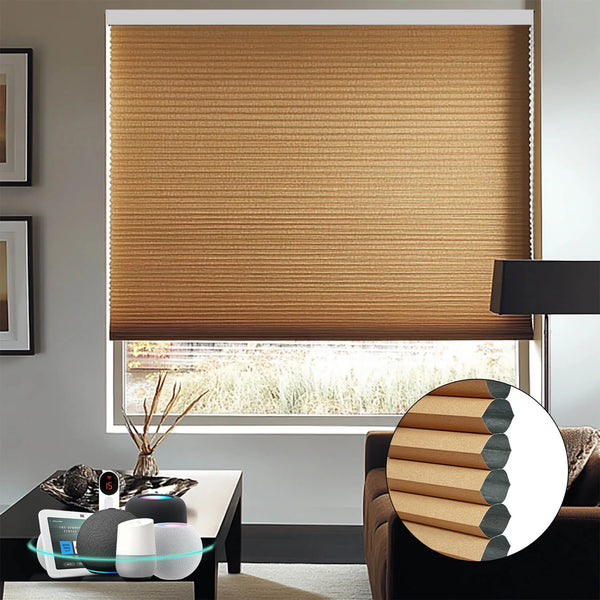
The Bringnox Blackout Motorized Cellular Shades address both insulation and reach. Its 38 mm honeycomb fabric traps air near the glass, while the remote can control up to 15 shades. That combination lets a homeowner close several high shades together when outdoor temperatures rise or fall.
How to Choose Motorized Blinds for High Windows
Power and service access decide whether the shade remains convenient. A high-window system should also include a simple local control if Wi-Fi or a smart-home service is unavailable.
Pick power before smart features
Choose the option that reduces future access. A lower purchase price has little value if every charge or reset requires special equipment.
Rechargeable motors work well when wiring is not available. Confirm the charging-port side and whether an approved cable can reach it safely. A solar panel can help where the glass receives steady daylight.
Plug-in power avoids recharging if an outlet is close enough. Hardwired power is often the cleanest choice during construction. It requires electrical planning before the wall is closed.
Match controls to your household
One or two shades may need only a handheld remote. A bank of clerestory windows benefits from group control. Scheduling helps when direct sun reaches the room at a predictable time.
Voice control helps people with limited reach, but it should not be the only method. Keep a labeled remote in a known place. Ask how stop positions are reset after an outage.
Plan for service from the floor
Ask how the motor is charged and reset. A charger port hidden behind a cassette can turn a simple job into another ladder visit. If a shade must be removed for battery service, get a written service plan from the seller or installer.

How to Measure High Windows Safely
Custom shades are built from the numbers you submit. Measure the opening and usable depth. Do not copy the size from another window.
Confirm the mount and finished width
An inside mount sits within the recess. It needs enough flat depth for the brackets and cassette. Ask for both finished headrail width and fabric width. An outside mount overlaps the opening and can reduce side light. Record each opening separately. Mark the motor side and photograph anything that could block the fabric path.
Know when to hire an installer
Use a professional when the window is above an open stair or beyond your ladder's safe working height. Measurement and bracket placement need stable access. Do not balance on furniture or extend a ladder with boxes.
Buying Checklist for Blinds for High Windows
Write the answers on the order sheet before payment.
-
Is the window vertical, sloped, or shaped?
-
Can the chosen model handle the finished width, height, and fabric weight?
-
Where will the motor get power, and how will it be serviced?
-
Does the fabric solve glare, privacy, or room darkening?
-
Will an inside mount leave side gaps you cannot accept?
-
Can every installation step be completed from stable access?
-
Which remote, hub, or smart-home controller is included?
-
What warranty applies to the fabric, motor, and custom fit?
View a fabric sample in daylight and after dark. Confirm custom-order terms before payment.
FAQs
Can I use cordless shades with an extension wand?
Yes, on moderately high windows when the shade supports a wand. Confirm the safe reach and compatible hardware. A wand is less useful above stairs or furniture.
Can shades on high windows help protect furniture from fading?
Yes. UV-filtering shades can reduce ultraviolet exposure on flooring, rugs, furniture, and artwork beneath high windows. Protection varies by fabric and shade position.
Can existing blinds on high windows be motorized?
Sometimes. Retrofitting depends on the existing blind or shade system, so have a motorization specialist confirm compatibility before ordering a kit. Also check which movement the motor controls. Some retrofit kits automate only the tilt of horizontal slats; they do not raise or lower the entire blind.
How do you clean shades on hard-to-reach windows?
Follow the care instructions for the exact fabric. Many shades allow gentle dusting or vacuuming with a brush attachment, but some materials have cleaning restrictions. For high windows, use an extension attachment only where it provides controlled, safe access.
Are motorized shades quiet enough for a bedroom?
They can be, but noise levels vary by model. Ask for the selected motor’s sound rating and measurement distance, and listen to a demonstration if possible before choosing shades that will operate while someone is sleeping.
Final Recommendation for Blinds for High Windows
Choose a motorized roller shade for most vertical high windows, then decide whether you need light filtering or blackout fabric. Use cellular shades when insulation is the main concern and tracked systems for sloped glass.
The purchase is sound when power, fit, and future service are clear before you order. A remote at floor level solves daily reach, while safe installation and accessible maintenance keep the solution useful for years.