



Wood Blinds Repair for Common Slat, Cord, and Tilt Problems
Wood blinds repair can restore a damaged slat or a failed operating part when the rest of the blind remains sound. If your blinds still fit the window and the damage is limited, check the affected system before buying replacements. A blind that will not rise needs a different repair from one that rises normally but will not close.
Why Are My Wood Blinds Not Working?
Operate the blind gently and observe what stops moving. If a cord is visibly frayed, leave that control alone until you can inspect it.
|
What happens |
Where to begin |
|
A slat is cracked or missing |
Slat replacement section |
|
The wand turns without changing the slat angle |
Tilt connection checks |
|
The blind rises unevenly |
Lift cord inspection |
|
The blind will not hold its height |
Cord lock inspection |
|
The bottom rail moves by hand without a pull cord |
Model-specific cordless troubleshooting |
Find the Model and Prepare the Work Area
Look inside the headrail for the product label. The headrail is the top housing that contains the operating parts. Use its model information when requesting a service diagram or ordering hardware.
Photograph the blind before removing anything. Include the bottom cord anchors and the connections inside the headrail. Keep small fittings in a container so they remain available during reassembly.
For repairs that require removal, support the blind while releasing its mounting brackets. Use a stable work surface long enough to hold it without bending the slats. A wide or heavy blind may need another person to help lower it safely.
How Do You Replace a Broken Wood Blind Slat?
Check whether lift cords pass through holes in the slat faces. A blind with those holes requires partial unthreading. A routeless blind uses a different removal method.
Choose a Slat That Fits the Existing Blind
A spare slat at the bottom may provide a replacement. Confirm that removing it will leave enough blind length to cover the window. If no spare fits, ask the original seller whether matching slats remain available. Do not trim an unrelated piece before confirming that its cord openings match.
|
Detail to match |
What to compare |
|
Length |
Measure an undamaged slat from end to end |
|
Width and thickness |
Compare the replacement directly with the original |
|
Cord openings |
Check hole positions or edge notches |
|
Surface shape |
Match the profile and facing direction |
Remove a Slat With Cord Holes
Open the slats horizontally if the tilt control still works. Access the underside of the bottom rail and remove the plugs covering the lift cord anchors. Release the anchors according to the model’s instructions. Untie knots where practical rather than cutting away cord that you may need during reassembly.
Pull the lift cords back through the slats only as far as the damaged piece. Leave the ladder supports in place. Slide out the broken slat, then insert the replacement on the same supporting rungs.
Keep each removed cord beside its original opening. Switching positions can make the route harder to follow when you thread it back.
Restore the Cord Route and Bottom Rail
Pass the lift cords through the replacement and the slats below it. Follow the original route shown in your photographs, including any crossings beside the supports.
Return each cord to its bottom rail anchor. Secure the connection using the specified arrangement, then tuck the fittings into their original positions and replace the plugs.
Check that no cord is trapped between the plug and the rail. Leave final excess-cord trimming until the completed blind has passed its operating check.
Replace a Routeless Slat
Fully lower the blind. Since no lift cord passes through the slat face, the damaged piece can slide out sideways.
Guide its edge notches past the surrounding strings without snagging them. Slide the replacement into the space and check that it rests on every supporting rung. A missed rung can leave the slat crooked. Do not pull harder if the piece catches. Find the contact point and release it before continuing.

How Do You Fix Wood Blinds That Won’t Tilt?
The tilt system changes the angle of the slats. Its control connects to a mechanism inside the headrail, which turns a metal rod. Work through the connections before assuming that the complete mechanism has failed.
Check a Loose or Broken Wand Attachment
Examine where the wand attaches to the shaft above it. A damaged hook or sleeve can prevent the wand from engaging even when the internal mechanism remains usable.
Replace only the failed connector if the shaft and wand are intact. A broken shaft may require a complete tilt assembly. Check the supplier’s part diagram to establish which component is replaceable. Avoid pulling down on the wand. It is designed to turn, and downward force can damage its attachment.
Reconnect a Tilt Rod That Has Slipped Out
With the blind removed, inspect where the metal rod enters the tilt mechanism. A loose rod can leave the control moving while the slats stay still.
Gently slide the rod back into its opening. Align the rod’s shape with the opening before applying pressure. If it will not seat, inspect the connection rather than forcing it farther.
A correctly seated rod should remain engaged during a small turn of the control. Watch the connection while checking it.
Replace a Tilt Mechanism With Damaged Gears
If the connections are intact but the mechanism slips or clicks without turning the rod, inspect it for gear damage.
On a serviceable design, move the rod only far enough to release the old tilter. Remove the mechanism using its intended clips or fittings, seat the replacement, and return the rod through the matching opening. Restore the removed end fittings afterward.
If only part of the blind responds, inspect the support connections along the rod. A local support fault needs attention even when the new tilter works.

How Do You Fix a Broken Cord on Wood Blinds?
Identify the damaged string before releasing it. The difference between lift cords and ladder strings matters because lift cords raise the blind, while ladder strings support the slats and help them tilt.
Replace a Frayed Lift Cord
Use cord intended for the identified blind mechanism and match the specified diameter. Ordinary household string may bind or stretch.
Release the affected bottom anchor and use the model’s service diagram to follow the cord through the slats. Continue through the headrail guides and cord lock. A route that looks correct below the headrail can still be wrong inside it.
Inspect the point where the original line frayed. A sharp guide or worn groove can damage fresh cord, so repair that contact point before completing the restringing.
Check the Cord Lock When the Blind Slides Down
A blind that will not hold its height may have a damaged lock or a crushed section of cord. Inspect both before ordering a replacement lock.
Keep the bottom rail supported while checking whether the lock grips at different positions. Note where slipping occurs and provide that detail when requesting service.
When Should You Replace Wood Blinds Instead of Repairing Them?
Replace the blind when the remaining damage prevents a dependable repair. Base that decision on its condition and the availability of compatible parts.
Ask for a complete repair quote if the job involves several assemblies. Include labor when comparing it with a replacement. If the slatted structure is extensively damaged, roller shades remove the need to replace individual wood pieces.
Replace Blinds With Widespread Slat Damage
Several warped or split slats can leave uneven coverage after an isolated repair. When the damage extends across the blind and suitable replacements are unavailable, stop replacing pieces individually.
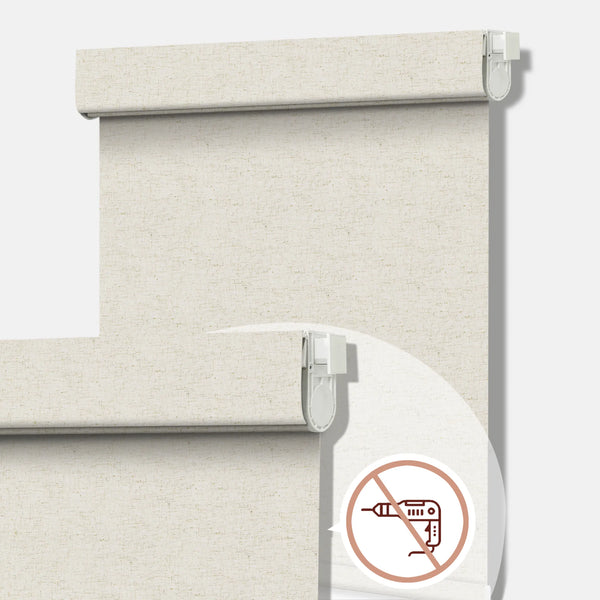
For a room that also needs stronger light blocking, the No Drill Motorized Roller Shades 100% Blackout Linen replaces the damaged slat stack. Its blackout material blocks light through the fabric, while the no-drill mounting design avoids new mounting holes where the specified system fits.
It has up to 650 cycles after a six-hour charge. That capacity reduces the need to reach the charging connection frequently.
Replace a Failed Tilt System When Compatible Parts Are Unavailable
Stop attempting a tilt repair when the required assembly cannot be sourced, or the headrail is too damaged to retain it securely. A similar-looking mechanism is not enough to establish a workable fit.
If adjustable daylight remains important, the Motorized Zebra Roller Blinds 100% Blackout provides light control through moving fabric bands. This removes the failed wood-blind tilter from daily operation while allowing you to change coverage without fully raising the shade.

Replace Corded Blinds When Repair Leaves an Accessible-Cord Hazard
Where young children live or visit, restoring an accessible pull cord leaves the underlying hazard in place. CPSC recommends cordless coverings in these settings. Cord-free motorized shades can provide remote adjustment without a hanging operating cord. Confirm the chosen product’s operating design before purchase.
FAQs
Will a Replacement Wood Slat Match the Existing Color?
Not always. Existing wood may have faded, so an original color code can still produce a visible difference. Compare a sample in the room’s daylight before ordering a replacement.
Can Repairing Wood Blinds Affect the Warranty?
It can. Coverage depends on the seller’s terms and the work performed. Ask whether the proposed repair requires authorization before dismantling a blind that may still be covered.
Can You Clean Wood Blinds After a Repair?
Yes, using the approved care method. A soft, dry cloth is a cautious starting point. Stained wood finishes may prohibit damp cleaning, so check the finish-specific instructions before applying water.
Conclusion
Wood blinds repair is worth considering when the damage is limited and compatible parts are available. Identify the failed component before taking the blind apart, then follow its specific repair instructions. Replace the covering when widespread damage prevents reliable operation or a repair would leave accessible cords around young children.