



How to Repair Blinds String for Each Cord Type
You can repair many blind strings, but the correct method depends on what the cord moves and where it runs. A lift cord passes through slats or fabric, while a ladder string supports slats. A tilt cord and a continuous loop operate different parts and cannot share the same repair steps. Identify the cord before ordering parts. A simple lift cord may be repairable, while an enclosed spring usually needs model-specific service.
What Types of Blinds String Are There and How Do You Identify Them
Manufacturers may produce different string systems; even one manufacturer may sell several operating systems. Lower the covering safely and watch what each control moves. Check whether the cord passes through slats, sits beside them, or forms a fixed loop.
|
Cord type |
How to recognize it |
Common window covering |
|
Lift cord or pull cord |
Thin line passes through slat holes or shade material and exits the headrail |
Horizontal blinds, Roman shades, some cellular shades |
|
Ladder string or ladder tape |
Two vertical sides are joined by small horizontal supports under each slat |
Venetian, wood, faux wood, and mini blinds |
|
Tilt cord |
Short control cord enters a tilter at one end of the headrail |
Older cord tilt horizontal blinds |
|
Continuous cord loop |
One closed loop stays almost the same length during operation |
Roller, cellular, Roman, and some horizontal shades |
|
Beaded chain loop |
Plastic or metal beads engage teeth in a clutch |
Roller shades and vertical blinds |
|
Traverse cord |
Cord moves vertical vanes sideways along a track |
Vertical blinds and some drapery tracks |
|
Hidden cordless lift string |
No pull cord is visible, but thin lines run inside the covering |
Cordless horizontal and cellular shades |
The exposed pull section and inner lift line can be parts of one cord. Ladder strings follow a different path and should never be cut during a lift cord repair.
Use movement as the final check. A line that changes the height is part of the lift system. A control that only changes the slat angle belongs to the tilt system.
On vertical blinds, sideways carrier movement identifies the traverse cord, while rotation points to the chain or wand.
Look inside the headrail or roller tube for a product label before buying parts. Record the model when available, then photograph the control side and cord entry point.
Check Safety Parts Before Any Repair
CPSC guidance says stock coverings must use a cordless system, a cord no longer than eight inches, or an inaccessible operating cord.
Record the original cord diameter and finished loop length before removing it. For a beaded chain, also measure the bead size and distance between beads.
Continuous loops need an approved tension device. Pull cords need their original stops and connectors. Household string may stretch or bind, so use cord made for the identified mechanism.

How to Repair Blinds String by Cord Type
Blind string repairs follow different paths because each cord works with a different part of the mechanism. Begin with the cord type, and keep the original routing visible before removing any part. Stop if you find a sealed spring or damaged load-bearing hardware.
How to Repair a Lift Cord or Pull Cord
A lift cord usually breaks because it rubs against a worn cord lock, carries an uneven load, or weakens with age. One side may hang low, or the blind may stop lifting completely.
-
Lower the blind and photograph the cord route.
-
Measure the original cord diameter and obtain the same size.
-
Remove the bottom rail plug and release only the damaged lift cord.
-
Pull the new cord through with the old line, or follow the photographed route when the old line is missing.
-
Tie each bottom anchor separately, rehang the blind, and test a short lift before trimming.
How to Repair Ladder String or Ladder Tape
Sagging slats or uneven gaps point to a torn ladder rung. Friction, brittle fibers, and a bent slat can damage the narrow supports that hold each slat.
Check both sides of the ladder before removing anything. A single damaged rung may accept a matching repair clip. Wider damage requires a complete ladder with the same width and rung spacing.
Photograph its connection to the tilt drum, remove the bottom rail, and slide out enough slats to release the old ladder. Attach the replacement to the same drum positions, then return every slat to its original rung.
How to Repair a Tilt Cord
The lift still works, but the slats will not rotate. This usually means the tilt cord slipped off its pulley, the tilt rod moved out of position, or the tilter gear stripped.
Remove the headrail cover and inspect the cord path first. Return a loose cord to its pulley and seat the tilt rod in the tilter. If the housing is cracked or the gear turns without moving the rod, install a matching tilter.
Rotate the control gently before closing the headrail. All slats should move together and stop without extra force.
How to Repair a Continuous Cord Loop
This system is common on roller shades and several fabric shade styles. Continuous loops fail when the cord frays at the clutch, the factory joint separates, or the loop stretches and begins to slip.
Replace the whole loop with one that matches the original material and length. Support the covering, open the clutch access point, and feed the new loop through the pulley path. Some clutches must be removed from the tube for this step.
Straighten the loop after reinstalling the covering. Anchor it with the approved tension device, then operate it slowly through one full cycle.
How to Repair a Beaded Chain Loop
Missing beads cause the chain to skip. Incorrect bead spacing makes it jam, while a damaged connector can leave the loop open.
-
Match the original bead diameter, spacing, and loop length.
-
Remove the damaged chain from the clutch or tilt control.
-
Feed the replacement over the teeth without forcing it.
-
Join the ends with the correct connector and restore the tension device.
If a vertical blind chain moves but the vanes stay still, inspect the carrier gear before replacing the chain.
How to Repair a Traverse Cord
The traverse cord can jump off a pulley, cross inside the track, or snap after repeated sideways movement. The vanes may still rotate, but the carrier stack will not open or close correctly.
Support the track and photograph the route around both end pulleys. Remove the failed cord, then thread a matching replacement through the master carrier and along the original path.
Set every carrier stem in the same direction before adding tension. Move the stack by hand first. If the master carrier does not travel, the carrier mechanism also needs repair.
How to Repair a Hidden Cordless Lift String
A cordless blind may lean because an internal string slipped from its spool. Lost spring tension can also leave the bottom rail stuck.
Start without opening the headrail. Hold the rail at its center, pull it down slightly, and guide it upward with even pressure. Stop if the rail stays crooked or the mechanism grinds. An internal reel may need restringing as a complete assembly, while an exposed spring requires professional service. Cord-free motorized blinds are a practical replacement when the internal system repeatedly fails.

When Blinds String Repair Should Become Replacement
Compare the price of the correct parts with the condition of the complete covering. Repair one identified cord when the load-bearing parts remain sound. A new cord has little value when the clutch slips, several ladders are brittle, or the mounting hardware no longer holds the headrail securely.
Replacement is also reasonable when a repair would leave an accessible loop in a room used by children. A cordless system removes that operating cord instead of relying on a temporary tie or misplaced tension device.
Replace an Accessible Cord in a Child’s Room
Replacing only the damaged line leaves an accessible operating cord in the room. The CPSC recorded more than 230 cord-related incidents involving children age eight or younger from 2009 through 2024. About eight children died each year on average.
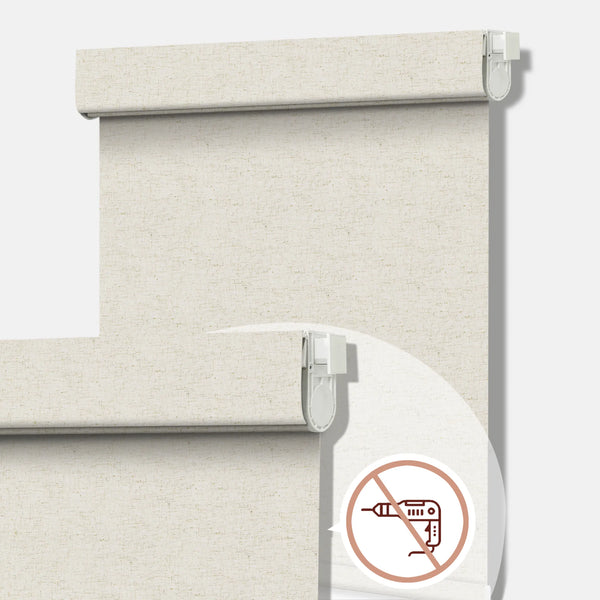
When the same window also needs nighttime light control, the No Drill Motorized Roller Shades 100% Blackout Linen addresses both concerns with cord-free motor operation and a mounting system that does not require wall holes. Its 100% blackout fabric supports bedroom privacy, while the listed battery delivers up to 650 cycles after a six-hour charge. That equals about four to six months of daily use without frequent access to the headrail.
Replace a System Damaged by Uneven Pulling
Repeated off-center pulling makes one side carry more load. Over time, the cord can fray again, and a wide covering may rise at an angle. Installing another string does not remove that uneven force.
For a wide bedroom or living room window, the Motorized Roller Shades 100% Blackout Baltimore removes the side pull and rolls the fabric with steady motor-driven movement. This prevents daily operation from depending on where a person pulls. The listed motor runs below 45 dB and provides up to 650 cycles per charge, giving quieter, more consistent movement with less routine handling.

FAQs
Is a Lift Cord the Same as a Ladder String
No. The lift cord raises the blind and passes through the slats. The ladder string supports each slat and helps it tilt. Their routes and replacement parts differ.
Is the Pull Cord Separate From the Inner Lift Cord
Sometimes. On many horizontal blinds, they are sections of the same line. Connectors or cord stops may separate the exposed control from the inner cords on other systems.
Can I Replace a Beaded Chain With Plain Cord
No. A beaded chain must match the clutch teeth. Plain cord will not engage the mechanism correctly. Order the specified bead size, spacing, and loop length.
Can Cordless Blinds Be Restrung
Some can. The repair depends on the internal spool and spring design. Use the exact service diagram and avoid opening a sealed spring assembly without trained support.
Why Does One Side of My Blind Stay Low
One lift cord may be broken, stretched, or outside its guide. Lower the blind, support the rail, and compare the cord routes before adjusting any bottom knot.
Final Check for Each Blind String Repair
Identify the cord by its job, visible route, and movement before starting. Preserve the original routing and safety hardware, then test the covering through short, controlled movements. Stop when parts do not match, or the mechanism remains uneven.
A completed repair should lift evenly, stop without slipping, and keep every cord or chain within its intended guide. Recheck bottom knots, connectors, and tension devices after the first full operating cycle.