



How to Choose Blackout Shades for Home Theater Light Control
The best blackout roller shades for home theater use should match your display, viewing time, and room function. A daytime projector needs opaque fabric with controlled edges. A television room may only need enough coverage to stop screen glare.
Choose the required darkness first. Then compare the shade style, mounting method, and control system. This order prevents you from paying for features that do not solve the light problem in your room.
How Much Light Control Do Blackout Shades for Home Theater Need
The right opacity depends on how much outside light reaches the screen. Consider whether you use a projector or television, when you watch, and whether the room needs daylight between viewing sessions.
Full Blackout for Daytime Projectors
Choose fabric sold as 100% blackout or fully opaque. The installation also needs close edge coverage. Side channels, light blockers, a cassette, and a bottom bar can reduce light around the panel.
The panel should show no general glow when a sample is held against direct daylight. A fabric percentage alone cannot describe the darkness of the completed room.
Bright TV Rooms Need Targeted Glare Control
A television produces its own light, so full blackout may be unnecessary. The main goal is to stop direct reflections and lower the brightness around the screen.
A room-darkening fabric around 70% may work when the window is beside the television and does not create a visible reflection. Choose stronger coverage when the window faces the screen or sits directly behind the main seats.
Night Viewing Allows a Simpler Setup
Nighttime viewing usually needs less solar control. Opaque fabric is still useful when streetlights, vehicle headlights, or nearby buildings remain visible through the window.
Check the room after sunset with the interior lights off. If the screen remains clear and no exterior light reaches it, a standard blackout roller shade may be enough without additional tracks.
A Dual Layer Keeps Shared Rooms Flexible
A shared living room should support both daytime use and darker viewing. One permanently closed blackout treatment can make ordinary use inconvenient.
Double blinds provide more control. Use a filtering layer during the day and lower an opaque layer when glare becomes distracting, or projector viewing begins.
Which Blackout Shades for Home Theater Work Best
Choose the shade style according to the main problem in your room. A flat roller shade suits strict light control, while a cellular shade may be more useful when window insulation is also important.
Roller Shades Give Projectors Precise Coverage
Roller shades use one flat panel and can sit close to the glass. Their straight edges also work well with compatible side channels or light blockers. Custom blackout roller shades are suitable when you can order the full unit for the window.
Look for opaque material, a standard roll, and a bottom bar that reaches the sill. A cassette can cover the top mechanism, though it does not close the normal side clearance.
Add Light Blockers When Seeing Side Light
Inside-mounted roller shades usually need clearance between the fabric and frame. Even 100% blackout roller shades can show two bright vertical lines when this space remains uncovered.
Choose a shade with compatible side tracks or light blockers. These accessories cover the space beside the fabric. An outside mount with wider coverage is another option when the wall around the window is flat.
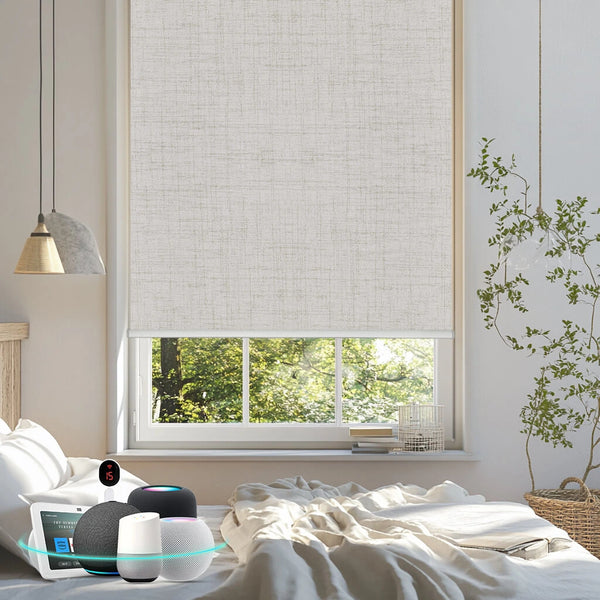
The Bringnox Motorized Roller Shades 100% Blackout Vigor combines an opaque panel with configurable light blockers and a valance. The panel controls light through the fabric, while the added components address the side and upper openings.
Cellular Shades Suit Hot or Cold Windows
Blackout cellular shades suit theater rooms with cold glass or strong afternoon sun. Their honeycomb pockets trap air near the window and can improve comfort around nearby seats.
The folded material may soften some reflected sound inside the room. It cannot soundproof the window or replace acoustic panels, sealed gaps, and other room treatments.
Keep Daylight in a Multipurpose Media Room
A living room or family room may need natural light for ordinary use. A separate filtering shade allows the blackout layer to remain raised until stronger control is needed.
Light filtering roller shades can soften direct sunlight during daytime television use. They should be combined with a separate opaque layer if the same room uses a projector.
Check the available mounting depth before choosing two shades. Separate rollers need room for two bracket sets, while an integrated dual system requires a deeper cassette.
One-Touch Control Helps With Several Windows
Motorized controls are useful when several windows need to change together. They also help when shades sit behind furniture or high above the floor.
The Bringnox Motorized Light Filtering Roller Shades 70% Blackout Linen can serve as the daytime layer in a shared media room. Its remote can control up to 15 shades, and the Matter option supports grouped control and scheduled positions. The motor noise is below 45 dB, while the rechargeable system is rated for up to 650 operating cycles.

How Should You Customize Shades for Your Theater
Adjust the shade according to the display location, window construction, room surfaces, and daily operating needs. The same product can perform differently in two rooms because these conditions change the amount and direction of stray light.
Start With the Screen and Window Direction
A window facing the screen needs stronger treatment because incoming light reaches the image directly. Use opaque material and control the panel edges.
A window behind the television mainly creates reflections for viewers. Blackout fabric is helpful, though a strong room-darkening treatment may work if the television is bright enough for daytime viewing.
Side windows may allow more flexibility. Sit in every normal viewing position and check whether the glass appears on the screen before choosing the final opacity.
Let Window Depth Decide the Mount
Deep, square frames can support a neat inside mount. Check the expected fabric deduction before ordering because the complete unit and fabric panel may have different widths.
Shallow or uneven frames are often better suited to an outside mount. The extra coverage can hide exposed glass and reduce angled light.
Large Windows Need the Right Hardware
Wide windows may need a larger tube to keep the fabric level. Confirm the maximum supported width for the selected motor, tube, and fabric before ordering.
Several narrow windows can use separate shades with grouped controls. This arrangement allows each panel to fit its opening while closing the whole room through one command.
Check handles, locks, and window cranks during measurement. A reverse roll can clear an obstruction, but it places the fabric farther from the glass and may increase the light path at the sides.

FAQs
Does White Blackout Fabric Block Enough Light?
Yes. An opaque backing can stop light through white fabric. A darker room-facing finish may reflect less projector light, so compare samples while the projector is running.
Can an ALR Screen Replace Window Shades?
No. An ambient-light-rejecting screen can reduce some off-angle light. Direct daylight and bright window gaps can still reduce visible contrast.
Will Blackout Shades Improve Theater Sound?
Only slightly. Soft or cellular treatments may reduce some internal reflection. They cannot block low-frequency noise or replace dedicated acoustic treatment.
When Are Blackout Curtains Enough?
Curtains may work when they provide wide side coverage and control the upper opening. Test them during the brightest part of the day before relying on them.
Is Motorization Necessary for Every Theater?
No. A manual cordless shade works for one accessible window. Motorization offers more value when several shades must close together, or the windows are difficult to reach.
Final Takeaway
Choose blackout roller shades according to the darkness you actually need. Daytime projection usually requires opaque fabric and controlled edges, while television rooms can use more flexible room-darkening options.
Well-fitted blackout roller shades offer a practical solution when precise coverage is the priority. Adjust the mount, hardware, color, and controls for your window instead of choosing from the fabric percentage alone.