



How Much Openness for Blackout Shades Is Enough?
For true blackout shades, 0% openness is enough and is the correct target. If you are shopping for bedroom shades and keep seeing 1%, 3%, or 5% openness, those numbers usually describe woven solar fabrics that still allow some light or view through the material. That distinction matters when you need darkness for sleep. Choosing a low-openness solar shade can reduce glare very well, yet it still performs differently from an opaque blackout fabric.
What Does Openness Mean for Window Shades?
Openness tells you how much open space exists in a woven shade fabric. The percentage helps predict how much daylight and outside view may remain when the shade is closed.
How Does the Openness Percentage Work?
Openness is the percentage of open space in a woven shade fabric. 1% openness means about 1% of the fabric surface is open space. The lower the openness, the tighter the weave and the less light can pass through. Higher openness allows more daylight through and gives a clearer view outside.
What Do Different Openness Percentages Mean?
Lower openness is usually chosen when glare control and daytime screening matter more. Higher openness is better suited to windows where maintaining daylight and an outside view is important.
|
Openness |
Daylight Through Fabric |
Outdoor View |
Common Priority |
|
0% |
None through opaque fabric |
None |
Darkness and privacy |
|
1% |
Very limited |
Limited |
Strong glare control |
|
3% |
Filtered |
Moderate |
Balanced light control |
|
5% |
More daylight |
Clearer |
View and daylight |
|
10% |
Highest among these options |
Strongest |
Maximum outward visibility |
How Much Openness for Blackout Shades Is Enough?
Blackout requirements are simpler than solar shade selection because the goal is to stop light from passing through the fabric. You do not need to compare several openness percentages when full darkness is the priority. The important step is confirming that the material itself is opaque.
Why True Blackout Uses 0% Openness
True blackout fabric uses 0% openness because there should be no open weave for daylight to pass through. Once a fabric contains measurable openings, it normally belongs to a solar, screen, or light filtering category.
Why 1% Openness Is Not Blackout
A 1% shade can appear quite dark during the day because only a small part of the weave remains open. It still has openings, so the fabric does not provide the same result as 0% blackout material. This difference matters when sunlight reaches the window directly.

How Does Openness Affect Light and Privacy?
Openness changes what happens after a woven shade is lowered. Less open fabric generally reduces the amount of daylight and outside detail you can see through it. More open fabric keeps the room visually connected to the outdoors. Privacy also changes with lighting conditions, so daytime performance should not be treated as nighttime performance.
0% Openness Works for Full Fabric Blackout
Choose 0% when light passing directly through the material would be a problem. Bedrooms used by light-sensitive sleepers and rooms exposed to exterior lighting are common examples.
The Bringnox Motorized Roller Shades 100% Blackout Linen use opaque blackout fabric designed to block incoming light through the shade itself. The fabric also has a multi-layer backing that helps reduce solar heat transfer and prevents outside views through the closed shade, so it addresses darkness and privacy at the same time.

1% to 3% Openness Gives Stronger Daytime Screening
A solar shade around 1% to 3% openness keeps only a small amount of open space in the material. The tighter weave reduces the amount of visible light and limits how clearly you can see through the shade. A 1% shade provides more screening, while 3% keeps somewhat more exterior visibility.
5% Openness Preserves More Outside View
A 5% solar shade leaves more open space than a 1% or 3% fabric. More daylight remains visible through the weave, and outdoor objects are easier to see.
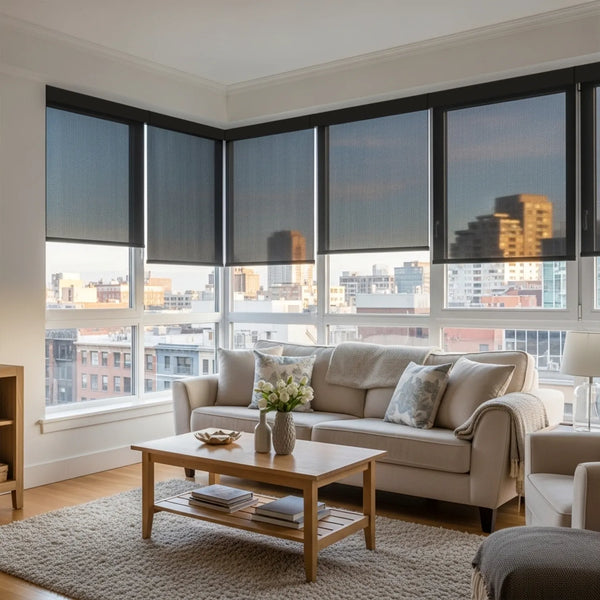
The Bringnox Motorized Light Filtering Sunscreen Solar Shades 5% Openness Aventus use a 5% open weave for this purpose. Bringnox lists 95% UV blockage for the fabric while keeping exterior visibility and reducing glare. This level suits windows where daylight and view still matter after the shade is closed.
What Openness Works Best in Different Rooms?
The best openness depends on what each room needs from the window. Bedrooms usually place more value on darkness, while work areas may need glare reduction without losing all daylight. Living areas often have more flexibility because the outside view can remain part of the room. Matching the blackout roller shades to the room first makes the percentage easier to choose.
Bedrooms Usually Need 0% Openness
A bedroom that needs reliable darkness should start with 0% openness. Blackout fabric also gives stronger privacy because the material is opaque. This can matter in ground-floor bedrooms or windows facing nearby homes.
If you still want softer daylight at other times, a second filtering layer can be added instead of increasing the openness of the blackout fabric.
Home Offices Often Use 1% to 3% Openness
Computer screens can become difficult to see when direct sunlight reaches the desk. A tighter solar weave helps reduce that glare while still allowing some daylight into the room.
A 1% fabric gives stronger screening where the window receives intense sun. A 3% fabric may work better when you still want a usable outside view during working hours.
Living Rooms Often Use 3% to 5% Openness
Living rooms usually do not require the same darkness as bedrooms. A 3% or 5% solar fabric can reduce bright daylight while keeping more connection with the outside.
A 3% option suits spaces where stronger glare control is useful. A 5% fabric makes more sense when preserving the view has greater value.
This is where light filtering roller shades can be more suitable than blackout shades. Their woven fabrics can soften daylight without turning the living room completely dark.

FAQs
Why Can 0% Openness Still Let Light Into a Room?
Light can enter around the fabric. Roller shades need clearance at the sides and bottom, so small gaps may remain even when the material itself has 0% openness.
Does Dark Fabric Turn a Solar Shade Into Blackout?
No. Dark color can change brightness and outward visibility, but an open weave still contains gaps. Blackout performance depends on opaque construction rather than color alone.
Can Solar and Blackout Shades Be Used on the Same Window?
Yes. A dual-layer setup can use solar fabric for daytime glare control and an opaque shade when darkness or nighttime privacy is needed.
Should Large Windows Use a Different Openness Percentage?
Not automatically. Window size does not change what the openness percentage means. Large windows make daylight and the outside view more noticeable, so comparing fabric samples at the actual window becomes more important before ordering.
Does Lower Openness Always Keep a Room Cooler?
Not always. A tighter weave can reduce solar transmission, but heat performance also depends on fabric color, reflectance, window glass, and fabric construction.
Conclusion
So, how much openness for blackout shades is enough? Choose 0% openness when you need the shade fabric itself to block light.
Move above 0% only when keeping some daylight or exterior visibility is useful. In those rooms, compare solar shade openness based on glare, privacy, and the amount of view you want to keep. Installation still matters because even a 0% blackout fabric needs enough window coverage to create a dark room.