



Top 5 Best Brands for UV-Blocking Roller Shades in 2026
A good UV-blocking roller shade brand should provide clear fabric-performance data, enough openness choices for different rooms, reliable custom sizing, and controls that fit the way you live. It should also explain the trade-offs between UV protection, glare control, privacy, and outdoor visibility instead of treating them as the same benefit. We compare the five brands using current manufacturer information rather than independent side-by-side laboratory testing.
The 5 Best Brands for UV-Blocking Roller Shades in 2026
These five brands suit different buying priorities. Use the comparison to create a shortlist, then evaluate the individual fabric and operating system before making a final decision.
|
Brand |
Best For |
Standout Feature |
Main Limitation |
|
Hunter Douglas |
Premium customization |
More than 180 solar fabric and color choices |
Expert-led process may be more than a simple project needs |
|
Graber |
Openness and lift choices |
Clearly explained 1%, 3%, 5%, and 10% fabrics |
More openness reduces solar control and privacy |
|
Bringnox |
Smart features and value |
Custom motorized shades with several openness choices |
Features vary with the selected fabric and motor |
|
Lutron |
Whole-home automation |
Shade and lighting integration across multiple systems |
UV performance must be checked separately |
|
Levolor |
Published solar specifications |
UV data by collection, openness, and color |
Similar choices require careful comparison |
Hunter Douglas: Best Overall Premium Brand
Hunter Douglas is the strongest fit when fabric, finish, controls, and installation support all matter. Its Designer Solar Shades are intended to curb harsh UV exposure while retaining an outdoor view. The current collection lists more than 180 fabric and color choices, along with several operating options.
Its main advantage is the depth of customization backed by professional guidance. Its expert-led process helps coordinate different fabrics across several rooms and can simplify large or design-sensitive windows.
Graber: Best for Openness-Factor Selection
Graber’s main advantage is a clear path from room needs to fabric and lift choices, which makes the tradeoff between protection and view easy to understand.
Its solar shades come in 1%, 3%, 5%, and 10% openness. A lower number generally means tighter fabric, stronger glare control, and less view-through. Graber also lists motorized, UltraLite cordless, standard cordless, and continuous-loop lift systems.
Bringnox: Best for Smart Features and Overall Value
The main advantage of Bringnox is the balance of customization, automation, and ordering convenience. Its roller shades range combines several openness choices with cordless operation, remote control, scheduling, and optional connected controls. This combination works well for west-facing rooms, large window walls, and windows that are difficult to reach.
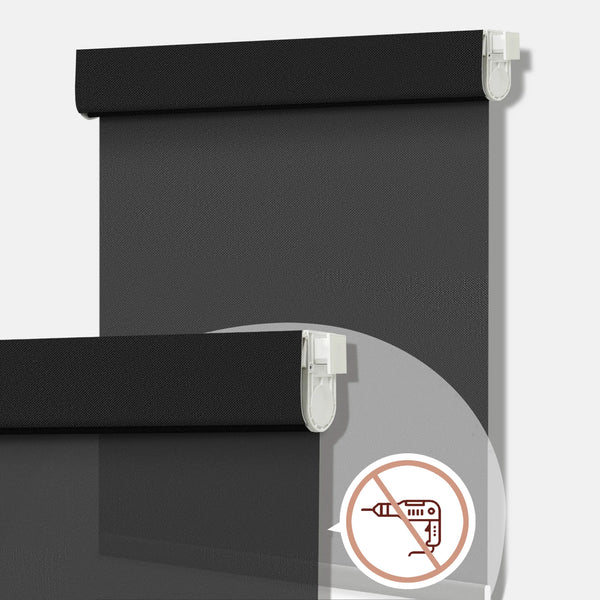
The brand also offers no-drill configurations for compatible frames, which can suit renters or homeowners who want to avoid permanent holes.

Lutron: Best for Whole-Home Automation
Lutron is strongest when shades belong in a larger lighting and control plan. Its Serena, Triathlon, Sivoia, and Palladiom roller families cover different installation methods, dimensions, and project levels.
Depending on the configuration, Lutron lists compatibility with Caséta, RadioRA 3, and HomeWorks. Timed scenes can lower west-facing shades before intense afternoon light arrives, while a keypad can coordinate shades and electric lighting.
Lutron makes the most sense in a compatible smart home or a planned lighting project, while a standalone shade may not capture the same system value.
Levolor: Best for Published Solar Specifications
Levolor suits shoppers who want fabric-level data. Its custom roller shade guide includes collection, color, openness, visible transmission, reflection, absorption, and UV rating.
The chart lists 1% Catalina and Newport fabrics at 99% UV protection. Many 3% fabrics show 97%, although some show 95%. The details appeal to specification-conscious buyers, but make it difficult to match each sample and color to the correct technical row.
How to Choose the Best Brand for UV-Blocking Roller Shades
Brand reputation helps narrow the field, but fabric and installation determine how a shade performs at a particular window. Compare the following specifications on the exact configuration, not only on a collection overview.
Check the Verified UV Rating
Look for an explicit UV value tied to the fabric name, openness, and color. “Solar protection” does not equal a stated percentage. If a page gives only a collection-wide maximum, ask whether it applies to your material.
For example, the Bringnox Motorized Light Filtering Sunscreen Solar Shades 1% Openness Aventus page advertises up to 99% UV blocking. That makes the shade relevant for a bright, fade-sensitive room where a tight weave and motorized control are useful.
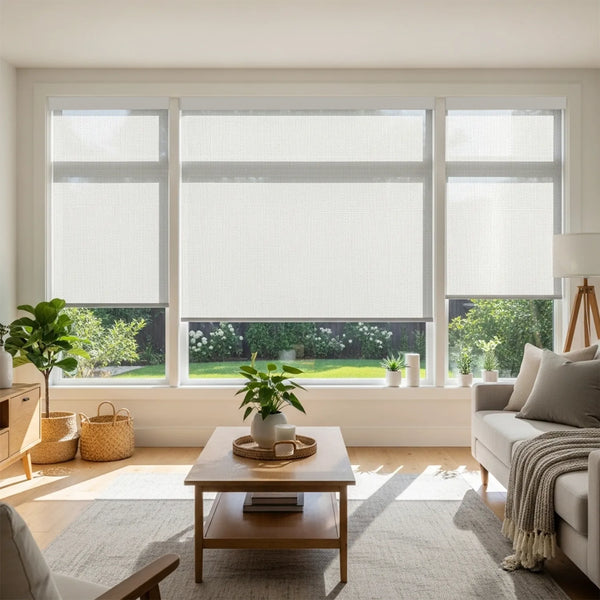
Match Openness to the Window
Lower openness gives the fabric a tighter weave. Higher openness admits more daylight and preserves more of the outside view. The practical pattern is:
-
1% openness: Strongest glare and solar control in the group, with the most restricted view.
-
3% openness: Strong control with a more usable view for many offices and bright living rooms.
-
5% openness: A balanced starting point when daylight and view still matter.
-
10% openness: The clearest view, with less privacy and solar control.

Separate UV Protection, Blackout, and Privacy
Solar fabric filters UV and glare while preserving some daytime view. Blackout describes fabric performance, although side gaps can still admit light.
Open-weave solar shades may screen a room by day yet reveal interior details at night. Choose blackout, a dual shade, or drapery for after-dark privacy.
Consider Color, Direction, and Room Use
Start with the brightest and most difficult time of day. West-facing windows and screen-heavy offices often benefit from 1% or 3% openness. A scenic window with moderate exposure may justify 5% or 10% if preserving the view is the priority.
Color affects the visual result too. A sample can look different when backlit by direct sun than it does under showroom lighting. Place shortlisted fabrics against the actual glass, then compare glare, view-through, and room brightness during peak exposure.
Verify Fit and Control Options
A shade can have excellent fabric data and still disappoint if its fit leaves more exposed glass than expected. For suitable frames, the Bringnox No Drill Motorized Roller Shades 1%/3%/5% Openness Aventus combines tool-free mounting with solar fabric and motorized controls. Before ordering, check:
-
Inside-mount depth and outside-mount coverage
-
Fabric width, ordered width, and expected side gaps
-
Manual, cordless, or motorized operation
-
Hub, app, voice assistant, and control-system compatibility
-
Warranty, remake, and replacement-part terms
FAQs
What type of roller shade blocks the most UV rays?
Tightly woven solar fabrics and opaque roller fabrics generally provide stronger protection. The exact rating matters more than the category name, so check the manufacturer data for the selected fabric and color.
Is 1% or 5% openness better for UV protection?
The 1% option generally offers stronger UV and glare control. A 5% fabric usually keeps a clearer view and more daylight.
Do UV-blocking roller shades provide privacy at night?
Most open-weave solar shades do not provide dependable nighttime privacy. Interior light can make the room visible from outside. Use a blackout shade, dual shade, or drapery where privacy after dark is essential.
Are blackout roller shades better than solar shades?
Blackout shades are better for darkness and privacy. Solar shades are better for daytime glare control with some outward visibility.
Can UV-blocking shades stop furniture from fading completely?
No. UV-blocking shades can reduce one important source of fading, but they cannot guarantee complete prevention. Visible light, heat, exposure time, and the sensitivity of each material can also affect color change.
Which Brand Should You Choose?
-
Choose Hunter Douglas for a premium, expert-supported design process and a broad solar fabric range. Choose Graber when you want clearly organized openness and lift choices.
-
Bringnox is the practical smart-value option for custom motorization and direct ordering.
-
Lutron is strongest when shades must join a larger lighting and automation system.
-
Levolor is the easiest of these five to investigate through published fabric-level solar data.
Shortlist two brands, order samples, and test them against the real window during its brightest hours. Before purchasing, verify the UV rating for the exact fabric and color, confirm the mounting dimensions, and make sure the control system fits the way you plan to use the room.