



Sidelight Window Shades for Privacy and Light Control
For most narrow entry windows, custom light filtering roller shades give the best balance of daytime privacy and useful daylight. Blackout fabric is the better choice when the glass faces a street or needs dependable coverage after dark. A good result depends on how the fabric handles light and how closely the installed shade covers the glass. Color and style come after those two decisions.
How Sidelight Window Shades Control Light and Privacy
A roller shade controls light with a flat fabric panel placed between the glass and the room. Its performance comes from the fabric structure, the contrast between indoor and outdoor light, and the uncovered space around the panel.
How shade fabric changes incoming light
Light filtering fabric allows part of the visible light to pass through its fibers. The material spreads direct sunlight across a wider area, which reduces sharp glare while keeping the entry bright. A denser weave passes less light and usually hides indoor shapes more effectively.
Blackout fabric uses an opaque layer or coating to stop light from passing through the material. The face fabric can still have color or texture because the backing provides most of the light blocking. This construction also prevents a clear view through the lowered shade.
Why blackout fabric can still leave edge light
Blackout describes the material rather than the entire installation. Light can pass around the panel if the fabric does not cover the full glass area. This effect is common with inside-mounted roller shades because the brackets and control mechanism are wider than the cloth.
An outside mount can extend beyond the glass and reduce exposed viewing angles. Compatible side channels offer closer edge coverage on some systems.
Why privacy changes after sunset
Privacy depends on which side of the glass is brighter. During the day, strong outdoor light can make a light filtering shade difficult to see through from the street. The room may still receive soft natural light.
Indoor lighting reverses that contrast after sunset. People outside may see silhouettes through a fabric that felt private earlier. The result changes with fabric density and the distance between a person and the window.
Test a full-size sample from outside with the normal hall lighting on. Use blackout material when body outlines remain easy to identify.
Best Sidelight Window Shade Options for Day and Night
The best option depends on when privacy is needed and whether you want to recover a clear view. Adjustable shades suit changing needs, while film provides fixed coverage.
Light filtering roller shades for daytime use
Light filtering roller shades suit entries that need privacy from casual daytime views without losing natural light. The flat panel also keeps the window area simple, which helps on narrow glass beside a door.
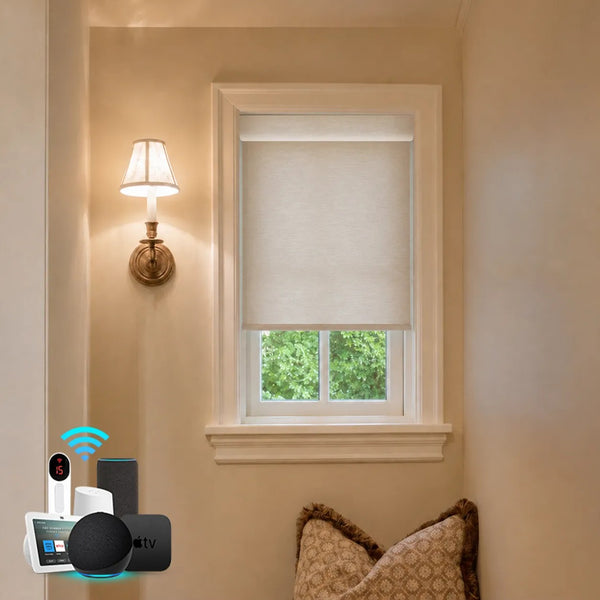
The Bringnox 10 to 18 Inch Small Window Motorized Light Filtering Roller Shades address the limited headrail width found on many sidelights. Their semi-sheer fabric softens direct light, while cordless motorized control lets the user close a tall, narrow shade without reaching for a small bottom bar.
Blackout roller shades for nighttime privacy
Opaque fabric provides stronger privacy when indoor lighting is brighter than the porch. It also reduces glare from exterior lights and passing vehicles.
Available blackout roller shades differ in texture and control type; a 100 percent blackout label usually describes the fabric in laboratory or material terms. It does not mean that the installed window becomes a sealed dark opening. Outside mounting or added edge coverage may still be needed.
Cellular shades and frosted film
Light filtering cellular fabric diffuses direct sunlight and blocks a clear view through the sidelight. It provides useful daytime privacy while keeping the entry bright. Room darkening or blackout cellular fabric provides better nighttime privacy and reduces glare from porch lights or passing vehicles.
Frosted film is useful when privacy can remain fixed throughout the day. It preserves diffuse daylight and requires no headrail. It cannot be opened to check a visitor, and its night performance varies with the material and interior lighting.
Motorized controls and cordless safety
Motorized roller shades let a tall sidelight close at a set time without a reachable pull. The user does not need to touch or pull the fabric during regular operation. This reduces handling marks and helps the shade roll evenly over time.
Cordless construction removes loose operating cords from the narrow frame. It creates a cleaner appearance and is more suitable for entries used by children or pets.
How to Fit Sidelight Window Shades Correctly
Accurate fit requires more than the visible glass dimensions. The brackets need a flat mounting surface, the roller needs enough depth, and the lowered fabric must avoid the handle.
Measure the complete shade area
Use a steel tape to measure the inside width at three heights. Record the narrowest number for an inside mount. Measure the height in the same areas and follow the ordering rule for the exact shade. Record the usable frame depth separately because locks and raised trim can reduce it.
|
Fit check |
Why it matters |
|
Narrow product width |
Confirms the motor can fit many sidelights |
|
Typical fabric deduction |
Predicts inside mount side coverage |
|
Fully recessed depth |
Shows whether the unit can sit flush |
|
Measurement increment |
Reduces errors on a narrow opening |
Choose an inside or outside mount
An inside mount keeps the unit within the recess. It works when the frame is deep enough and expected fabric gaps do not expose the room.
An outside mount covers a wider area and suits shallow trim. The shade must remain clear of the handle and door swing.
The technical differences in inside mount versus outside mount blinds help explain how frame depth and overlap affect the choice.
Check the exterior viewing angle
A shade can cover the glass when viewed straight ahead but still leave a narrow sightline at the side. Mark the planned fabric edges with painter’s tape. Walk toward the door from the sidewalk and check each common approach.
If the room remains visible, use an outside mount and extend the shade beyond the glass. Keep the unit clear of the door handle and confirm that the bottom rail will not interfere with the door swing.
Compatible side channels can cover the lateral gaps when additional overlap is unavailable. They hold the fabric closer to the frame and reduce angled views, but the shade and channels must be designed to work together.
Allow space for the roller and valance
The fabric panel is only one part of the unit. The tube and brackets occupy space above the glass, while a cassette surrounds most of the roll. A motor can require more width than a manual control. Confirm access to the charging port before installation.
Different roller shade valance options change the finished depth and the amount of visible hardware. A cassette creates a cleaner top line, though it needs more recess space and does not close normal side gaps.

FAQs
Can renters cover sidelights without drilling?
Yes. Static cling film is the simplest reversible choice. Approved adhesive systems may support some lightweight shades, but the surface and weight limits must match the manufacturer’s instructions.
Should both sidelights use the same shade?
Usually, yes. Matching fabric and hem height create even coverage. Separate motors can still move together when the selected control system supports grouping.
Can a sidelight shade work with a smart doorbell?
Sometimes. Both devices must support a shared automation platform or compatible routine. Voice control alone does not confirm that doorbell events can trigger the shade.
Do solar shades provide privacy at night?
Usually, no. Solar mesh preserves an outward view, which can permit inward visibility when the room is brighter. Choose opaque fabric for dependable nighttime privacy.
Choosing Sidelight Window Shades for Your Entry
Light filtering roller shades are the practical starting point for an entry that needs daytime privacy and natural light. Blackout fabric is more suitable when the sidelight exposes the home after dark.
Confirm the complete unit width before comparing colors. Check the frame depth and exterior viewing angle, then choose a cordless control that suits daily use. These steps have more effect on privacy than decorative details.