

Can You Motorize Existing Blinds? Retrofit Options Explained

Yes, you can motorize many existing blinds when the current mechanism is compatible with a retrofit motor. Roller shades and wand-tilt horizontal blinds usually offer the clearest options. Cellular, Roman, and vertical systems need more specialized hardware.
Which Existing Blinds Can Be Motorized?
Each blind type transfers movement through different hardware. The correct retrofit motor must connect to that hardware and provide enough force for the installed covering.
|
Existing window covering |
Can it usually be motorized? |
Recommended motor |
|
Roller shade |
Often |
Tubular motor |
|
Chain-operated roller shade |
Often |
External chain motor |
|
Horizontal blind with tilt wand |
Often |
Tilt motor |
|
Horizontal blind needing full lift |
Sometimes |
Lift-and-tilt motor |
|
Zebra shade with chain loop |
Often |
External chain motor |
|
Roman shade |
Sometimes |
Motorized headrail |
|
Cellular shade |
Sometimes |
Headrail motor |
|
Vertical blind |
Sometimes |
Motorized track drive |
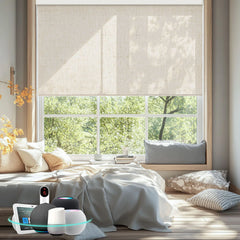
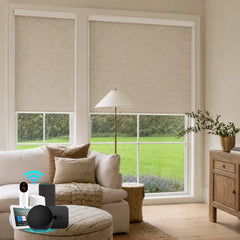
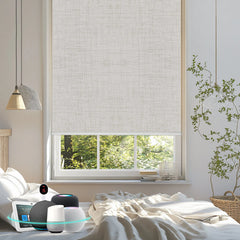
If your current blind cannot accept a supported retrofit motor but you still want powered control, choose a complete shade built around its motor. The Bringnox Motorized Light Filtering Roller Shades combine a rechargeable motor with custom sizing and light-filtering fabric, so the tube and controls are designed to work together. The fabric softens direct sunlight while keeping the room bright, making it suitable for everyday living spaces where full blackout is unnecessary.

Bringnox Motorized Light Filtering Roller Shades 70% Blackout Linen
Roller Shades Use a Tubular or External Chain Motor
A tubular motor fits inside a compatible roller tube and replaces the manual clutch. It provides a clean result because the motor and drive parts remain inside the shade.
The tube diameter, internal profile, usable width, and fabric load must match the motor specification. A motor that fits through the tube opening may still have the wrong drive adapter or too little torque.
An external chain motor can operate a roller shade without changing the tube. It mounts beside the window and turns the existing beaded chain. This option works only when the chain fits the drive wheel, and the manual clutch moves smoothly.
Horizontal Blinds Need a Tilt or Lift Motor
A tilt motor is the practical choice when you only want to adjust the slat angle. It connects to the tilt wand or the mechanism inside the headrail. The lift cord remains manual unless the kit specifically supports lifting.
Full lift requires a stronger and more complex system. The motor must raise the headrail load evenly while also controlling the slats. Heavy wood and faux wood blinds place greater demand on this mechanism.
Zebra Blinds Can Use a Chain Motor
Many zebra blinds use a continuous beaded loop to move alternating fabric bands. An external chain motor can pull that loop and provide open, closed, and intermediate positions. The existing shade must track evenly.
Cellular and Roman Shades Need a Compatible Headrail
Cellular shades lift through internal cords inside a compact headrail. Roman shades raise fabric through cords and rings. A standard roller motor does not match either system.
Use a headrail motor or complete lifting assembly approved for the exact shade construction. The lifting hardware still needs a documented match.
Vertical Blinds Need a Motorized Track Drive
Vertical blinds use a track to move the vanes sideways and another mechanism to rotate them. A compatible track drive may automate one or both actions. Replacing the track may be necessary when the original rail was not designed to accept a motor.
How Do You Motorize Existing Blinds?
DIY motorized blinds are suitable for documented tilt kits, external chain motors, and tubular kits made for compatible roller tubes.
Do not attempt the conversion yourself when it requires fixed electrical wiring, tube cutting, a rebuilt headrail, or handling a wide and heavy shade. Those projects need a window-covering technician or licensed electrician.
Step 1. Identify the Existing Mechanism and Check Its Condition
Operate the blind through its full travel. Record how the blind currently moves. Look for a tilt wand, beaded loop, roller clutch, or internal lift cord. Photograph the mechanism before removing any cover or bracket.
It should remain level and move with steady effort. Stop the project if the fabric drifts, the tube bends, or the headrail makes grinding sounds. Repair the blind first, then test it again before choosing a DIY kit.
Step 2. Measure the Blind and Select a Compatible Kit
For a roller shade, measure the tube outside diameter without including the fabric. Record the tube profile and usable length between the brackets. Check the space available inside any cassette.
For a tilt motor, identify the wand connector and headrail shape. A chain motor also needs the chain size and a firm mounting surface beside the window.
Compare every measurement with the kit specification. Confirm the supported blind weight and the exact movement provided. A tilt-only kit will not raise the blind.
The available power options for motorized blinds affect both installation and future charging. Rechargeable power is usually the simplest DIY option.
Step 3. Install the Retrofit Motor
Remove the blind according to its original instructions. Keep the manual clutch, brackets, and fasteners together in case the conversion must be reversed.
Fit only the adapters supplied or approved for the motor. A tubular motor should slide into the roller tube without deforming it. An external chain motor must keep the loop aligned and correctly tensioned. Secure the motor and reinstall the blind on level brackets.
Step 4. Pair the Controls and Set the Travel Limits
Pair the remote using the instructions for the exact motor. Run a short movement first. Check that the fabric stays centered and the brackets remain stable. Set the upper and lower limits only after the blind travels without resistance.
If the kit supports an app, complete remote pairing before adding the hub. Confirm that the physical remote still works when the network is unavailable.
Step 5. Test the Blind
Complete one full opening and closing cycle. Stop if the motor becomes unusually hot, the blind stalls, or the tube shifts inside the brackets. Recheck alignment before running another cycle.

How Do Motorized Blinds Work After a Retrofit?
A retrofit system uses electricity to turn a small motor. The motor transfers that rotation to the blind’s existing drive mechanism. The control system tells it when to move and where to stop.
The Motor Converts Electrical Power Into Movement
A rechargeable battery or plug-in adapter can supply electricity to the motor. Hardwired power blinds receive power through a permanent connection. Internal gears reduce the motor’s speed and increase the turning force available to move the blind.
The motor must provide enough torque for the installed load. If the shade is too heavy or the mechanism has excessive resistance, the motor may slow down, stop, or consume power more quickly.
Direction Commands Open or Close the Blind
The controller changes the direction of motor rotation. One direction raises a roller shade or opens the slats. Reversing the motor lowers the fabric or closes the slats.
A handheld remote usually sends these commands directly by radio. A wall control can perform the same function. Connected systems may receive the command from an app or smart home hub before passing it to the motor.
Travel Limits Tell the Motor Where to Stop
Upper and lower limits define the blind’s fully open and fully closed positions. These limits prevent a roller shade from winding too far or lowering beyond the window.
Some motors store the limits electronically during setup. Others use adjustment controls on the motor head. Intermediate favorite positions may also be saved when the controller supports them. Incorrect limits can cause the fabric to stop early or place strain on the brackets.
Local Controls Keep Basic Movement Available
Remote-controlled motors can usually operate without Wi-Fi. Smart models may need a hub or network for app access and voice commands.
The physical remote should remain available when the internet or hub is offline. Confirm this local control before installation, especially when the blind covers a bedroom window or an entrance.
FAQ
Do Motorized Blinds Make Noise?
Yes. Most motors produce a low operating hum. Noise depends mainly on the motor design and installation alignment.
How Long Do Retrofit Motor Batteries Last?
It varies. Shade size and daily movement affect the charging interval. Record the first real interval after installation and keep the charging port safely accessible.
Can Motorized Blinds Still Be Operated by Hand?
Only when manual override is supported. Pulling a standard motorized shade can damage the drive or change its saved limits.
Can One Remote Control Multiple Retrofitted Blinds?
Sometimes. The motors must use a compatible control protocol, and the remote must support multiple channels or groups.
Can You Keep the Existing Fabric When Motorizing Roller Shades?
Sometimes. The fabric may be reused when it is undamaged, and the new tube supports its size and weight.
Do Retrofit Motors Need Special Wiring?
Usually no. Rechargeable and plug-in motors avoid fixed wiring. Hardwired systems require planned electrical work and should be installed by a qualified professional under local requirements.
Can You Motorize Existing Blinds Successfully?
You can motorize existing blinds when the motor matches the current movement, dimensions, load, power route, and control system. Roller shades and wand-tilt blinds usually provide the most straightforward retrofit paths.
Inspect the blind before buying a kit. Use documented adapters and load limits, then test the completed system at low travel. A safe retrofit should move smoothly, remain serviceable, and retain reliable local control.
Have a Window Measurement or Smart-Home Question?
Leave your window width, mount type, or smart-home setup below—our product team reviews reader questions.