


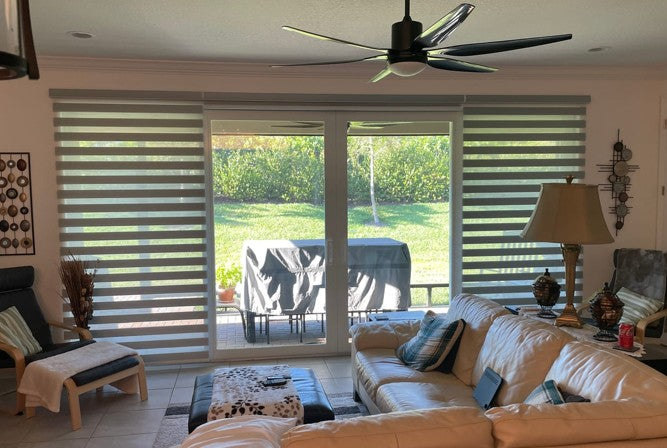
French doors need shades that look clean, stay out of the way, and hold up to daily use. In most homes, the best shades for French doors are cellular shades, roller shades, and Roman shades, because they can be custom-fit, give you better light control, and work well on narrow glass panels.
The right choice depends on your privacy needs, door handle clearance, and how often the doors open. Below, we’ll break down which shades work best, where each style fits, and what to check before you buy.
Safety matters too. The U.S. Consumer Product Safety Commission and the Window Covering Safety Council both recommend cordless window coverings as the safer choice in homes with young children.
Why Window Shades Matter for French Doors

French doors need special shades because regular window coverings often sit too far out, hit the handle, or swing around every time the door opens. A good French door shade has to stay slim, operate smoothly, and give you privacy without getting in the way.
French doors are different from standard windows for a few reasons:
- They open and close often. That puts more daily wear on the shade.
- The handle sticks out. If the shade is too bulky, it can rub against the hardware.
- The glass panel is usually narrow and tall. That calls for a cleaner, more tailored fit.
- The shade moves with the door. If it is not secured well, it can flap, shift, or look crooked over time.
This is why French door shades are usually better when they are:
- Low profile
- Easy to raise and lower
- Available in custom widths
- Compatible with hold-down brackets
That last point matters more than many buyers expect. If your doors open to a patio, backyard, or breezy entry, hold-down brackets help keep the bottom rail in place so the shade does not swing every time the door moves. That small detail can make the difference between a shade that feels solid and one that feels annoying after a week.
What Types of Shades Work Best for French Doors?
The best shades for French doors are usually cellular shades, roller shades, Roman shades, zebra shades, woven wood shades, solar shades, and pleated shades. For most homes, though, cellular shades and roller shades are the safest starting point because they stay slim, fit narrow glass panels well, and handle daily traffic better than bulkier styles.
Here’s a quick side-by-side comparison before we break down each option in more detail:
| Shade Type | Best For | Privacy Level | Handle Clearance | Insulation | Maintenance | Best Room Types |
| Cellular Shades | Best overall performance | High | Excellent | Excellent | Low to Moderate | Bedrooms, patio doors, back doors |
| Roller Shades | Clean look and easy upkeep | Medium to High | Excellent | Moderate | Low | Kitchens, family rooms, offices |
| Roman Shades | Softer, more decorative style | High | Fair to Good | Moderate | Moderate | Bedrooms, dining rooms, entryways |
| Zebra Shades | Flexible daytime light control | Medium | Good | Low to Moderate | Moderate | Living rooms, home offices |
| Woven Wood Shades | Natural texture and warmth | Low to Medium without liner; High with liner | Fair | Low to Moderate | Moderate | Entryways, coastal rooms, casual interiors |
| Solar Shades | Glare reduction and UV control | Low at night | Excellent | Low | Low | Sunrooms, offices, back doors |
| Pleated Shades | Budget-friendly coverage | Medium | Good | Low | Low to Moderate | Guest rooms, secondary doors |
1. Honeycomb Shades (Cellular Shades)

Cellular shades are one of the best all-around options for French doors. They have a slim profile, help with insulation, and come in both light-filtering and blackout fabrics.
Best for:
- Bedrooms
- Patio doors with heavy sun exposure
- Homes that need better insulation
Why they work well on French doors:
- The profile is slim enough for tighter handle clearance
- The fabric looks neat on tall, narrow glass panels
- Top-down, bottom-up, and blackout options give you more control
Watch for:
- Full blackout versions can feel visually heavy in small rooms if the fabric is too dark
- Lower-quality versions may crease faster on high-use doors
If your French doors feel hot in summer or cold in winter, cellular shades are often the most practical pick. They solve both comfort and appearance at the same time.
According to the U.S. Department of Energy, tightly installed cellular shades can reduce heat loss through windows by 40% or more in heating seasons and cut unwanted solar heat gain by up to 60% in cooling seasons.
2. Roller Shades

Roller shades are one of the easiest options to live with. They look simple, take up very little space, and work especially well in modern homes.
Best for:
- Kitchens
- Family rooms
- Modern and minimal interiors
Why they work well on French doors:
- They sit close to the door
- They are easy to clean
- They come in solar, light-filtering, and blackout fabrics
Watch for:
- Some roller shades show more side light gaps than cellular shades
- Lower-end hardware may wear out faster on busy doors
If you want a cleaner look without extra folds or bulk, roller shades are usually a smart starting point.
3. Roman Shades

Roman shades work well on French doors when you want a softer, more decorative look. They bring in texture and fabric detail that roller and cellular shades do not.
Best for:
- Bedrooms
- Dining rooms
- Traditional, classic, or transitional spaces
Why they work well on French doors:
- They make the doors feel more finished
- You can match them to nearby window treatments
- Lined versions improve privacy and light control
Watch for:
- They stack up thicker when raised
- They need enough clearance around handles and trim
- On very narrow doors, bulky folds can look crowded
Roman shades are a strong style-first option, but they still need the right fit and fabric choice to work well on a working door.
4. Sheer Shades (Zebra Shades)

Zebra shades use alternating solid and sheer bands, so you can shift between filtered light and privacy throughout the day.
Best for:
- Living rooms
- Home offices
- Contemporary interiors
Why they work well on French doors:
- They give you flexible daytime light control
- The look feels modern without being too stark
- Motorized versions are easy to adjust
Watch for:
- They are better for daytime privacy than full nighttime privacy
- Lower-end fabrics can show wear sooner on frequently used doors
These work best when brightness control is the priority. For a bedroom that needs stronger privacy after dark, other options usually make more sense.
5. Woven Wood Shades

Woven wood shades bring warmth and texture to French doors. They are a good match for relaxed interiors and spaces that need a more natural finish.
Best for:
- Coastal spaces
- Farmhouse interiors
- Natural, earthy, or casual rooms
Why they work well on French doors:
- They add texture where glass can feel cold or flat
- They pair nicely with neutral furniture and wood tones
- Privacy liners improve usability
Watch for:
- Unlined versions do not offer much privacy at night
- Natural materials can vary in color and weave
- They are usually more about style than full blackout control
If you like the woven look, add a liner. That turns it from a decorative choice into a much more practical one.
6. Solar Shades
Solar shades are best when glare and UV exposure are the main problems. They reduce harsh sun while still keeping much of your outdoor view.
Best for:
- Sunrooms
- Offices
- Back doors with strong afternoon sun
Why they work well on French doors:
- They cut glare on screens
- They help protect flooring and furniture from sun exposure
- They keep the room feeling open
Watch for:
- They do not give full privacy at night
- They are not the best stand-alone option for bedrooms
Solar shades are useful when your main goal is glare control, not maximum privacy.
7. Pleated Shades
Pleated shades are a budget-friendly option for French doors. They can work well in lower-traffic rooms where you want a light, simple look without spending too much.
Best for:
- Guest rooms
- Secondary doors
- Budget-conscious updates
Why they work well on French doors:
- They are lightweight
- They come in many colors and prints
- They can be easier on the budget than custom Roman shades
Watch for:
- They usually do not insulate as well as cellular shades
- They may not hold up as well on doors you use all day
Pleated shades make sense for occasional-use doors, but for heavy daily traffic, cellular or roller shades are usually the better long-term choice.
Are Motorized Shades Worth It for French Doors?

Yes, motorized shades are worth it for French doors if you use the doors often, want a cleaner look, or do not want to adjust several shades by hand every day. They are not required, but they do make daily use easier, especially on patio doors, tall glass panels, or hard-to-reach areas.
Motorized shades make the most sense when:
- You open the doors many times a day
- You want a cleaner, cordless look
- You have kids or pets
- You want scheduled light control during strong sun hours
The biggest advantage is convenience. If you have two or four glass panels in one area, manual operation starts to feel repetitive very quickly.
That said, fabric choice still comes first. If the fabric does not match your privacy or glare-control needs, motorization will not solve the problem.
How Do You Choose the Right Shades for French Doors?
To choose the right shades for French doors, start with clearance, privacy, light control, and daily use. If a shade looks good but rubs against the handle or moves every time the door swings, it is not the right fit.
1. Check door handle clearance first
Measure how far the handle or lever sticks out from the door. This tells you how slim the shade needs to be.
Best options for tighter clearance:
- Cellular shades
- Roller shades
- Some pleated shades
Options that need more room:
- Roman shades
- Some woven wood shades
If the hardware projects a lot, a bulky shade can hit the handle every time you raise or lower it.
2. Decide between daytime privacy and full privacy
Not every room needs blackout fabric. The right level of privacy depends on where the doors are and how you use the room.
- For bedrooms: choose blackout cellular, blackout roller, or lined Roman shades
- For living rooms: light-filtering cellular, zebra, or woven wood with a liner can work well
- For sun-facing rooms, solar shades help with glare, but they do not provide strong nighttime privacy
A shade that looks great during the day may still feel too exposed after dark once interior lights turn on.
3. Choose the mount style
Most French door shades use an outside mount because it is easier to clear the handle and cover the glass panel cleanly. An inside mount can work, but only when the door design gives you enough depth.
Outside mount usually works better because it:
- Gives you more flexibility around handles
- Covers the glass more fully
- Helps reduce side gaps
This is also where low-profile brackets help. They let the shade sit closer to the door and create a cleaner finish.
If you are still deciding between mount styles, this quick table makes the difference easier to see:
| Mount Type | When It Works Best | Main Advantage | Main Limitation |
| Inside Mount | When the door frame has enough depth, and the handle does not interfere | Cleaner built-in look | Often too tight for French doors with projecting handles |
| Outside Mount | When you need better handle clearance and fuller glass coverage | Easier fit, better coverage, fewer side gaps | Slightly more visible hardware |
| Door-Mounted Shade | When you want the shade to move directly with the door | Tailored look and better day-to-day function | Requires accurate measuring and the right hardware setup |
4. Think about daily traffic
A shade on a back patio door gets used very differently from a shade on a guest room door.
If the doors open all the time, prioritize:
- Durable hardware
- Easy operation
- Cordless or motorized control
- Hold-down brackets for stability
If the doors are mostly decorative or low traffic, you can put more weight on style and fabric detail.
5. Match the shade to the room problem
This is the easiest way to narrow your options.
- Need insulation? Choose cellular shades.
- Need a clean, modern look? Choose roller shades.
- Need softness and decoration? Choose Roman shades.
- Need glare control with a view? Choose solar shades.
- Need natural texture? Choose woven wood shades with a liner.
If you start with the room problem instead of the product name, the decision gets easier faster.
Which Shade Works Best in Each Room with French Doors?
The best shade depends on what each room needs most. In some rooms, privacy matters most. In others, glare control, easy cleaning, or a softer look matters more.
| Room | Best Shade Options | Why They Work |
| Living Room | Zebra Shades, Solar Shades, Light-Filtering Cellular Shades | These keep the space bright while giving you better daytime light control. |
| Bedroom | Blackout Cellular Shades, Blackout Roller Shades, Lined Roman Shades | These give you stronger privacy, better sleep support, and more insulation. |
| Kitchen | Roller Shades, Pleated Shades | These are easier to wipe down and usually feel lighter and less fussy. |
| Home Office | Solar Shades, Roller Shades | These reduce screen glare without making the room feel dark. |
| Patio or Back Door | Cellular Shades, Roller Shades | These hold up better to frequent use and usually work better with slimmer door clearance. |
| Entryway | Woven Wood Shades with Liner, Roman Shades | These add warmth and style while still giving you privacy when needed. |
A simpler way to think about it:
- Choose cellular shades if the room feels too hot, too cold, or too exposed
- Choose roller shades if you want a clean look and easy everyday use
- Choose Roman shades if style is just as important as function
- Choose solar shades if glare is the main problem
- Choose woven wood shades if you want texture and a more decorative finish
For doors that open all day, durability and clearance should still come before looks alone.
How Do You Keep French Door Shades Looking Good?

French door shades stay in better shape when you clean them lightly and use them gently. Because they move with the door, they usually deal with more vibration, more touching, and more daily wear than shades on a fixed window.
Use these care habits to help them last longer:
- Dust them once a week with a microfiber cloth, feather duster, or soft brush
- Vacuum fabric shades gently with a brush attachment on low suction
- Spot clean marks early with mild soap and a damp cloth
- Raise and lower them smoothly to reduce stress on the brackets and bottom rail
- Check the hold-down brackets from time to time
- Keep the area around the handle clean
- Replace or recharge motor batteries on time
If the shade is on a kitchen blind door, clean it a little more often because grease and residue build up faster.
If it is on a patio or backyard door, pay more attention to dust, humidity, and strong sun exposure.
Final Thoughts
The best shades for French doors are the ones that match your privacy needs, handle clearance, and daily use, not just your style preferences. For most homes, cellular shades and roller shades are the easiest choices to get right. Roman shades, woven wood shades, and zebra shades can also work well when the room calls for a softer or more decorative look.
Before you order, check these three things first:
- How far the handle sticks out
- How much privacy do you need at night
- How often do the doors open every day
If you start there, you will avoid most of the common buying mistakes.
The next step is simple: compare shade styles that fit your room, measure the glass area and handle projection carefully, and choose a made-to-fit option that suits how the doors are actually used. If you sell custom window treatments, this is also the right place to guide readers to your French door shades collection, your measurement guide, or your motorized shades page.
FAQs
Can you use blinds instead of shades on French doors?
Yes, but shades usually work better. Blinds can look bulkier, make more noise, and hit the door more easily when it opens and closes. Shades are often the cleaner and quieter choice.
Do French door shades need special hardware?
Often, yes. Many French doors work best with low-profile brackets, hold-down brackets, or door-mounted hardware that helps the shade stay close to the glass and clear the handle.
What is the best option for privacy?
Blackout cellular shades, blackout roller shades, and lined Roman shades are usually the best options for privacy. If nighttime privacy matters, avoid relying on solar shades or unlined woven wood shades alone.
Are cordless shades better for French doors?
Yes, cordless shades are often a better fit. They look cleaner, reduce cord clutter on the door, and are a safer option for homes with children or pets.
Can you install French door shades yourself?
Yes, many homeowners can install them on their own, especially roller shades and cellular shades. But if you are ordering custom shades, motorized shades, or working around tight handle clearance, professional installation can save time and mistakes.
Should shades be mounted directly on the door?
In many cases, yes. Mounting the shade directly on the door helps it move with the door and keeps the look more tailored. The best setup still depends on the door frame, handle projection, and shade type.


Leave a comment
This site is protected by hCaptcha and the hCaptcha Privacy Policy and Terms of Service apply.